
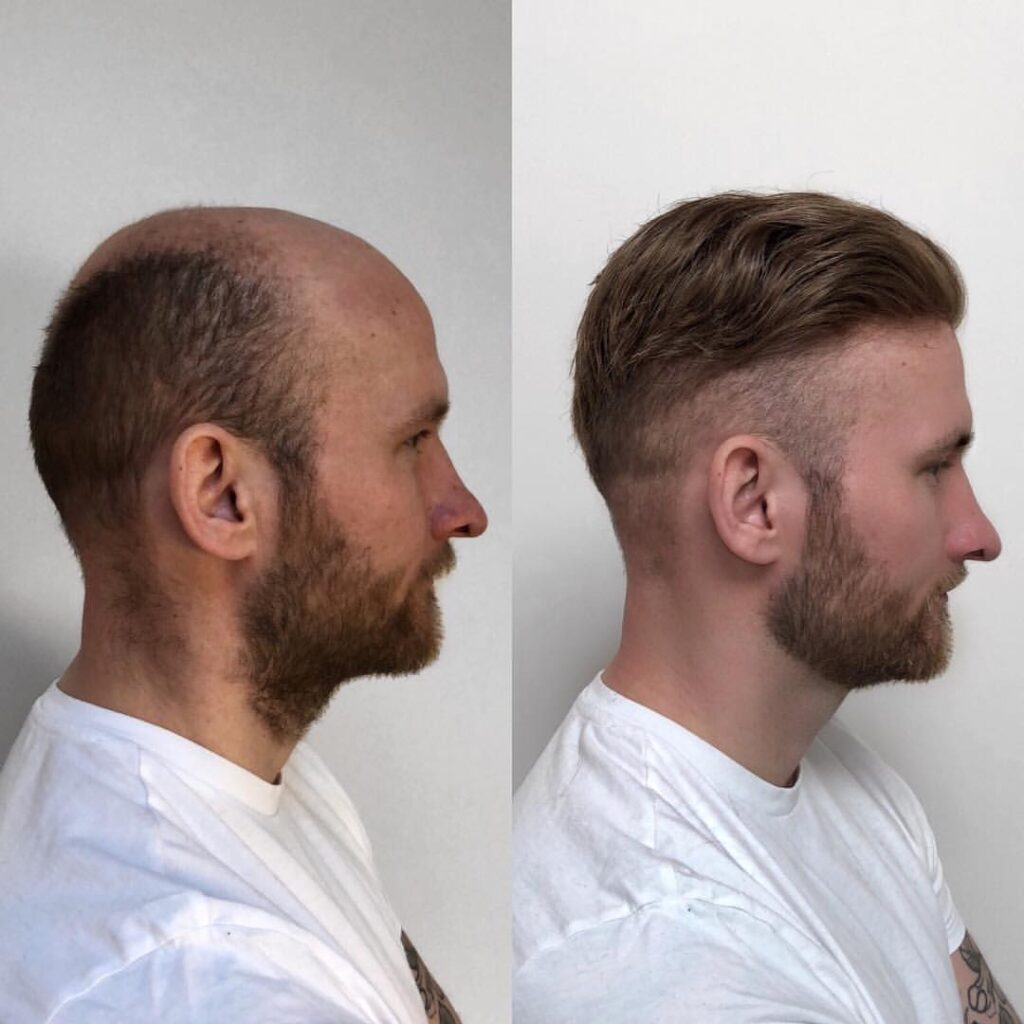
Ένα σύστημα μαλλιών είναι ένα μη χειρουργικό τεμάχιο αντικατάστασης μαλλιών κατασκευασμένο από ανθρώπινα ή συνθετικά μαλλιά προσαρτημένα σε μια λεπτή βάση. Τοποθετείται πάνω από μια συγκεκριμένη περιοχή τριχόπτωσης και μπορεί να κοπεί, να βαφτεί και να διαμορφωθεί ώστε να ταιριάζει με τα υπάρχοντα μαλλιά του χρήστη.
Αυτός ο απλός ορισμός κρύβει αρκετές επιλογές. Η βάση, το μέγεθος κάλυψης, το χρώμα μαλλιών, το ποσοστό γκρι, η πυκνότητα, η υφή και η μέθοδος στερέωσης επηρεάζουν όλα το πώς φαίνεται και αισθάνεται ένα σύστημα. Δεν υπάρχει ένας μοναδικός “καλύτερος” συνδυασμός για όλους.
Αυτός ο οδηγός εξηγεί αυτές τις επιλογές με απλά λόγια, ώστε να μπορείτε να προετοιμαστείτε για μια πρώτη παραγγελία χωρίς να προσποιείστε ότι γνωρίζετε προδιαγραφές που δεν έχετε ακόμη επιβεβαιώσει.
Σύντομη απάντηση: πώς λειτουργεί ένα σύστημα μαλλιών;
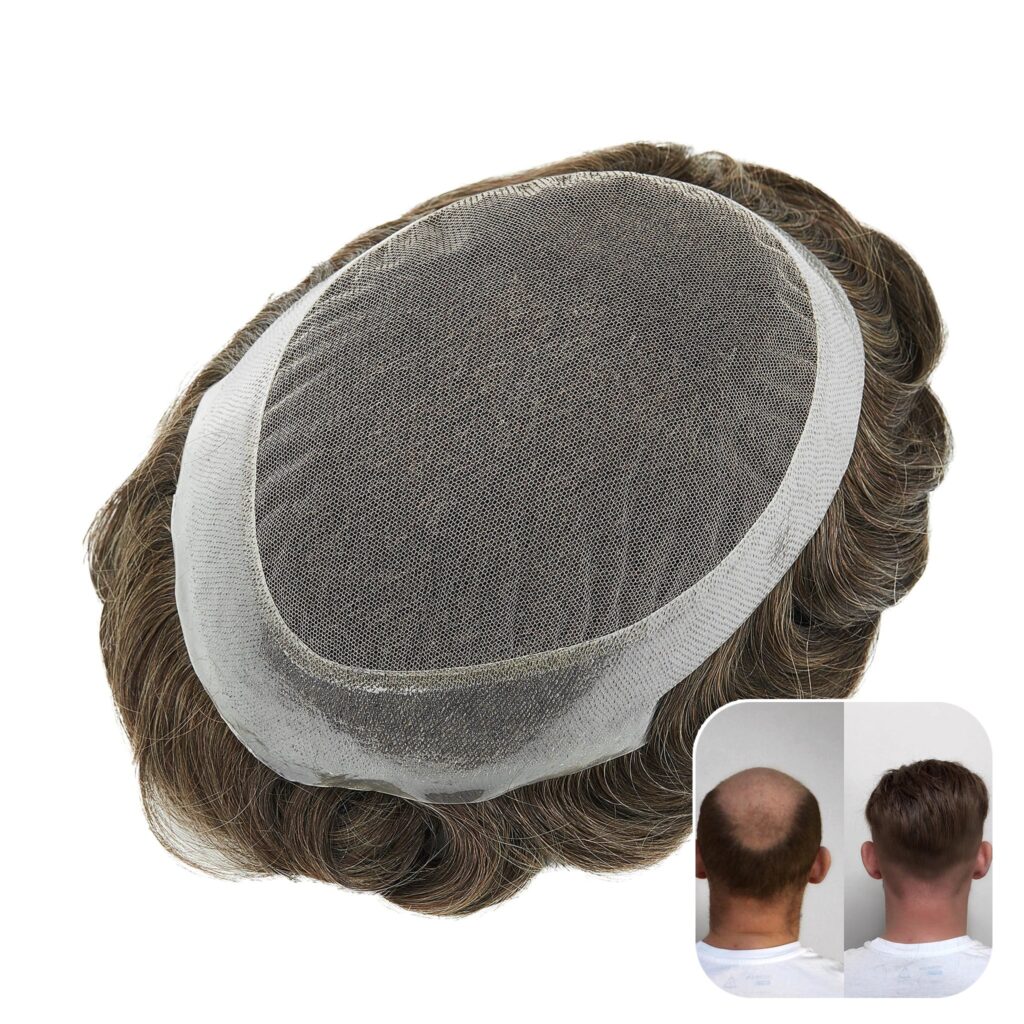
Τα μαλλιά βεντιλάρονται, εγχέονται ή προσαρτώνται με άλλον τρόπο σε μια βάση από λεπτό δίχτυ (lace), δέρμα πολυουρεθάνης, υλικό μονοίνης ή συνδυασμό αυτών. Η βάση τοποθετείται πάνω στο τριχωτό της κεφαλής και στερεώνεται με μια μέθοδο κατάλληλη για το προϊόν και τον χρήστη, όπως ταινία, υγρή κόλλα, κλιπ ή προσέγγιση που εφαρμόζεται σε κομμωτήριο.
Μόλις τοποθετηθεί, τα μαλλιά κόβονται και αναμειγνύονται με τα γύρω μαλλιά. Το τελικό αποτέλεσμα εξαρτάται από την προσαρμογή του συστήματος στο άτομο—όχι μόνο από την επιλογή της πιο λεπτής βάσης ή των πιο ακριβών μαλλιών.
Σύστημα μαλλιών, toupee ή περούκα: ποια είναι η διαφορά;
Αυτές οι λέξεις χρησιμοποιούνται μερικές φορές εναλλακτικά, αλλά δεν περιγράφουν πάντα την ίδια κάλυψη ή τη διαδικασία αγοράς.
| Όρος | Συνήθης έννοια | Συνήθης κάλυψη | Κύρια εστίαση επιλογής |
|---|---|---|---|
| Σύστημα μαλλιών | Ένα εφαρμοσμένο, μη χειρουργικό τεμάχιο αντικατάστασης σχεδιασμένο για μια καθορισμένη περιοχή τριχόπτωσης | Μερική ή εκτεταμένη | Βάση, μέγεθος, προδιαγραφές μαλλιών και ρουτίνα στερέωσης |
| Toupee | Ένας παραδοσιακός όρος που χρησιμοποιείται συχνά για ένα μερικό περούκα ανδρών | Συνήθως κορυφή, στέμμα ή μπροστινό μέρος | Ανάμιξη με τα ίδια τα μαλλιά του χρήστη |
| Περούκα | Ένα κομμάτι που καλύπτει γενικά ολόκληρο το τριχωτό της κεφαλής | Ολόκληρο το κεφάλι | Κατασκευή καπέλου, εφαρμογή, στυλ και συνολική κάλυψη |
Στην πράξη, ένας πωλητής μπορεί να αποκαλέσει το ίδιο μερικό προϊόν σύστημα μαλλιών, σύστημα αντικατάστασης μαλλιών, κομμάτι μαλλιών ή περούκα. Διαβάστε τις λεπτομέρειες μεγέθους και κατασκευής αντί να βασίζεστε μόνο στο όνομα.
Για μια πιο εμβριθή επισκόπηση πρώτου επιπέδου, δείτε τον Οδηγό για Αρχάριους.
Ποιος μπορεί να εξετάσει ένα σύστημα μαλλιών;
Ένα σύστημα μαλλιών μπορεί να ταιριάξει σε κάποιον που θέλει έναν μη χειρουργικό τρόπο για να καλύψει την αραίωση ή την απώλεια μαλλιών και είναι άνετος με μια ρουτίνα εφαρμογής και συντήρησης. Μπορεί επίσης να ταιριάξει σε έμπειρους χρήστες που γνωρίζουν ήδη τη βάση, το μέγεθος, το χρώμα και την πυκνότητά τους και θέλουν να αναπαράγουν μια γνωστή προδιαγραφή.
Συνήθεις καταστάσεις εκκίνησης περιλαμβάνουν:
- αραίωση στην κορυφή ενώ παραμένουν χρησιμοποιήσιμα μαλλιά στα πλάγια και πίσω;
- υποχώρηση ή απώλεια συγκεντρωμένη γύρω από την μπροστινή γραμμή των μαλλιών;
- ένα αραιωμένο στέμμα ή άλλη μικρότερη περιοχή που δεν απαιτεί πλήρη κάλυψη;
- ανάγκη για συγκεκριμένη μπούκλα, υφή, πυκνότητα ή προσαρμοσμένο σχήμα βάσης;
- προτίμηση για μια αφαιρούμενη επιλογή αντί για χειρουργική επέμβαση.
Ένα σύστημα μαλλιών δεν διαγιγνώσκει ή θεραπεύει την αιτία της απώλειας μαλλιών. Η απώλεια μαλλιών μπορεί να έχει διαφορετικές αιτίες, και το Ο NHS συμβουλεύει να αναζητήσετε κλινική βοήθεια αν ανησυχείτε γι' αυτό. Εάν η απώλεια είναι αιφνίδια, κατά τόπους, επώδυνη, φλεγμαίνουσα ή κατά τα άλλα ανεξήγητη, συμβουλευτείτε έναν ειδικευμένο επαγγελματία υγείας προτού την αντιμετωπίσετε μόνο ως αισθητικό ζήτημα.
Οι πέντε αποφάσεις που πρέπει να πάρετε πριν από την πρώτη σας παραγγελία
Δεν χρειάζεται να έρθετε έχοντας αποστηθίσει κάθε τεχνικό όρο. Χρειάζεστε όμως αρκετές πληροφορίες ώστε να αποφύγετε την επιλογή μόνο βάσει φωτογραφίας μοντέλου. Ξεκινήστε από την κάλυψη και μετά προχωρήστε στην κατασκευή και τις προδιαγραφές της τρίχας.
1. Ποια περιοχή χρειάζεται κάλυψη;
Η κάλυψη έρχεται πρώτη γιατί καθορίζει το μέγεθος της βάσης και την κατηγορία προϊόντος. Ένα τυπικό σύστημα κορυφής, ένα μετωπικό τεμάχιο, ένα patch κορυφής και μια λύση πλήρους κάλυψης δεν είναι εναλλάξιμα.
Μετρήστε την περιοχή που σκοπεύετε να καλύψετε και συγκρίνετε τη με τις αναγραφόμενες διαστάσεις της βάσης. Αν μια έτοιμη βάση είναι μεγαλύτερη από όσο χρειάζεται, ελέγξτε αν αυτό το μοντέλο μπορεί να κοπεί με ασφάλεια και πώς η τροποποίηση επηρεάζει την κατασκευή του. Μην υποθέσετε ότι κάθε βάση μπορεί να κοπεί με τον ίδιο τρόπο.
2. Ποια βάση ταιριάζει στη ρουτίνα σας;
της ReHair.
| Οικογένεια βάσης | Τι μπορεί να προσφέρει | Το tradeoff που πρέπει να λάβετε υπόψη | Ένα πρακτικό σημείο εκκίνησης |
|---|---|---|---|
| Δαντέλα | Ροή αέρα και ελαφριά αίσθηση | Ο καθαρισμός της κόλλας μέσα από το πλέγμα μπορεί να απαιτεί προσοχή | Θερμά κλίματα, ενεργές ρουτίνες ή άτομα που δίνουν προτεραιότητα στην αναπνοή |
| Λεπτό δέρμα | Επιφάνεια χαμηλού προφίλ και απλός καθαρισμός κόλλας | Λιγότερη ροή αέρα; το πολύ λεπτό υλικό χρειάζεται απαλή μεταχείριση | Εκτεθειμένες γραμμές τριχών ή χρήστες που δίνουν προτεραιότητα σε τελείωμα που μοιάζει με τριχωτό της κεφαλής |
| Mono | Περισσότερη δομή για επαναλαμβανόμενη χρήση και πυκνότερες πυκνότητες | Βαρύτερη και λιγότερο διαφανής από τη λεπτή δαντέλα ή το πολύ λεπτό δέρμα | Ρουτίνες με προτεραιότητα στην αντοχή ή άτομα που προτιμούν πιο σταθερή βάση |
| Υβριδικό | Συνδυάζει υλικά, όπως δαντέλα με περίμετρο πολυουρεθάνης | Κληρονομεί ορισμένους συμβιβασμούς και από τα δύο υλικά | Όσοι το φορούν για πρώτη φορά ή έχουν μικτές προτεραιότητες, όπως ροή αέρα συν ευκολότερη στερέωση στην περίμετρο |
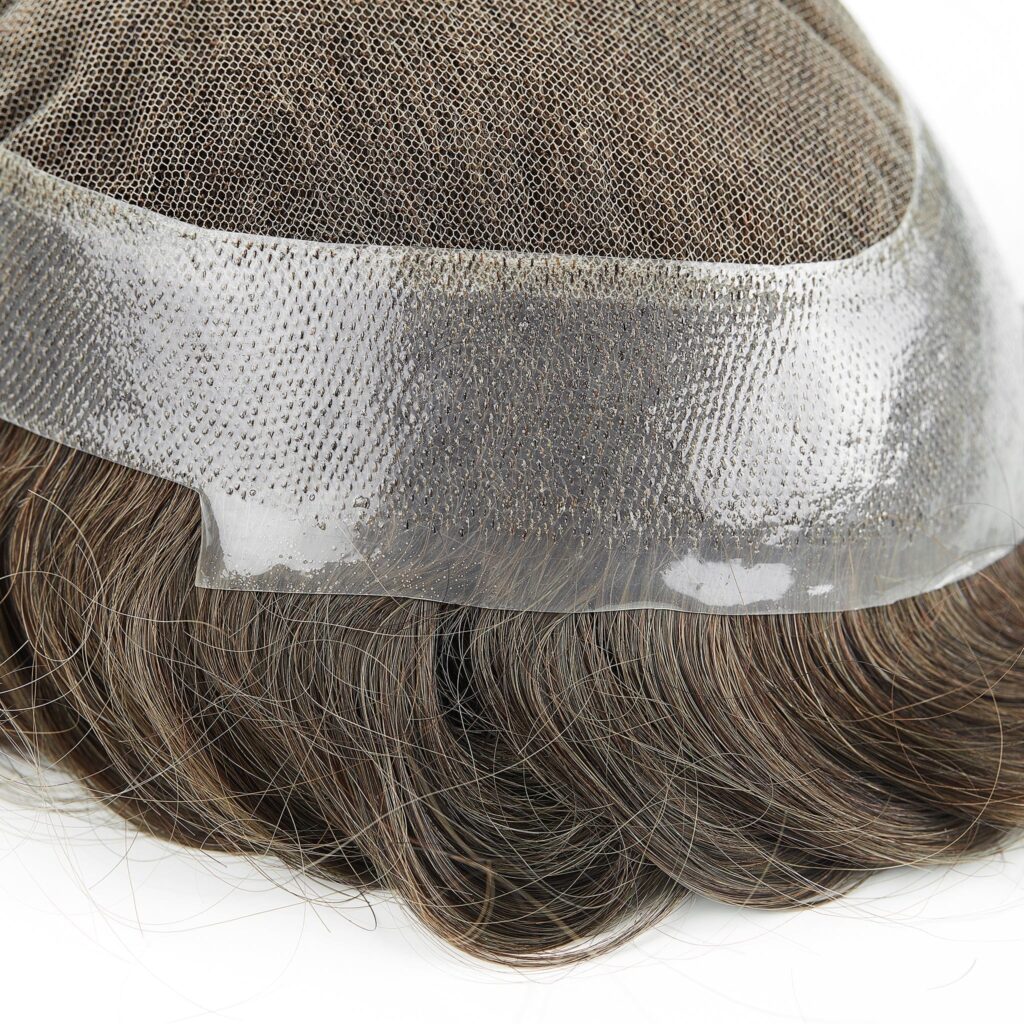
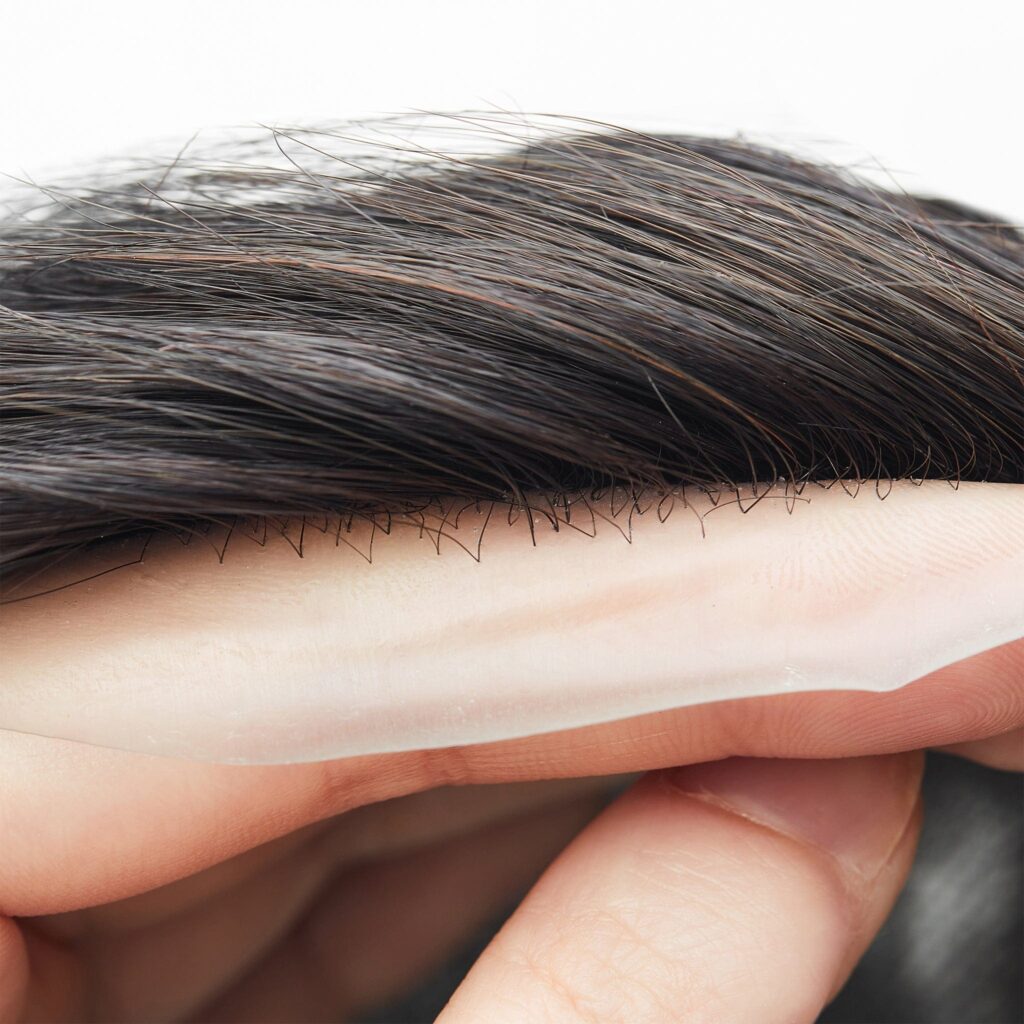
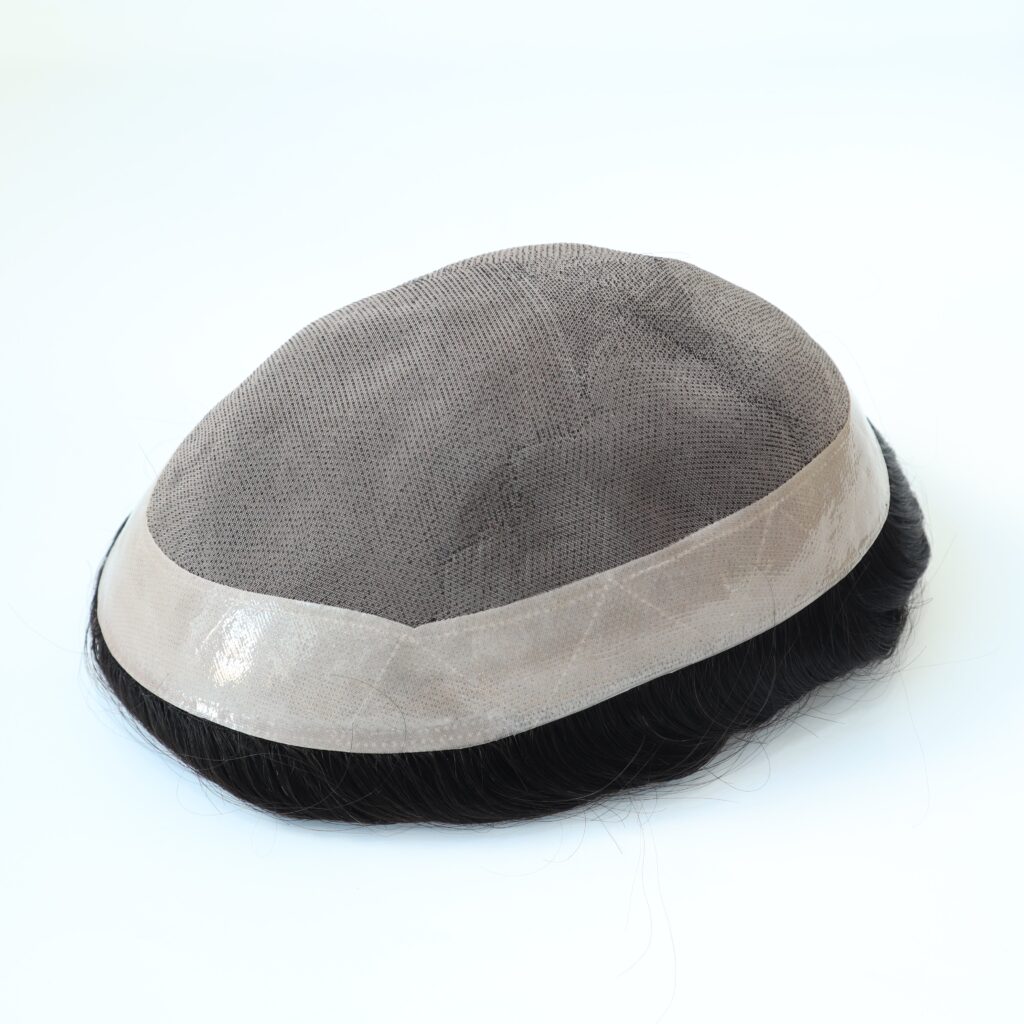
Αυτό είναι ένα πλαίσιο απόφασης, όχι εγγύηση αντοχής ή εμφάνισης. Χρησιμοποιήστε τον Επιλογέα Βάσης Συστήματος Μαλλιών για σύσταση βάσει ρουτίνας ή συγκρίνετε τους τύπους βάσης πριν επιλέξετε.
3. Τι μέγεθος και σχήμα χρειάζεστε;
Το μέγεθος της βάσης πρέπει να ταιριάζει με την περιοχή που καλύπτεται και να αφήνει αρκετά γύρω μαλλιά για καθαρή ανάμειξη όπου ισχύει. Πολύ μεγάλη μπορεί να καλύψει περιττά υγιή μαλλιά· πολύ μικρή μπορεί να αφήσει το άκρο της περιοχής αραίωσης εκτεθειμένο.
Τα έτοιμα συστήματα χρησιμοποιούν προκαθορισμένες διαστάσεις. Ορισμένα μπορούν να κοπούν σε μικρότερο σχήμα, ενώ άλλα έχουν χαρακτηριστικά—όπως ενισχυμένη περίμετρο ή συγκεκριμένη μπροστινή κατασκευή—που περιορίζουν από πού πρέπει να αφαιρεθεί υλικό. Ένα custom σύστημα είναι πιο κατάλληλο όταν το απαιτούμενο σχήμα, μέγεθος ή περίγραμμα δεν ταιριάζει σε έτοιμη επιλογή.
4. Ποιο χρώμα και ποσοστό γκρι ταιριάζει;
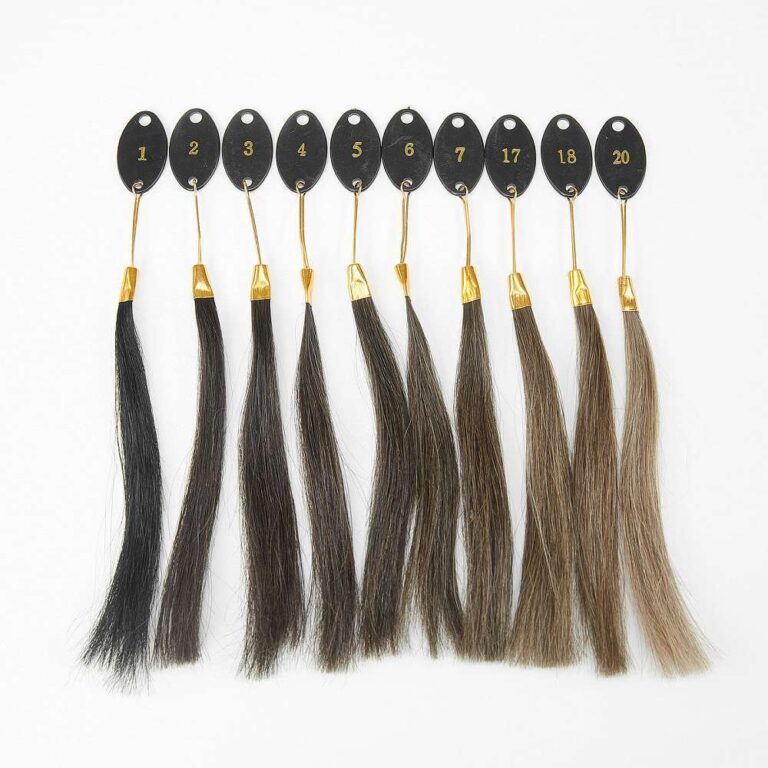
Το χρώμα μαλλιών είναι ευκολότερο να κριθεί από αρκετές τούφες παρά από μία φωτογραφία οθόνης. Ο εσωτερικός φωτισμός, η επεξεργασία του τηλεφώνου και οι ρυθμίσεις της οθόνης μπορούν όλα να αλλάξουν την εμφάνιση μιας απόχρωσης.
Η βάση είναι το υλικό που στηρίζει τα μαλλιά και εφάπτεται στο τριχωτό της κεφαλής. Η τρέχουσα καθοδήγηση της ReHair είναι ότι δεν υπάρχει καθολικά καλύτερη βάση: το κλίμα, η ρουτίνα στερέωσης, η συχνότητα αφαίρεσης και οι προτεραιότητες όλα παίζουν ρόλο. Οδηγός Χρώματος Μαλλιών της ReHair είναι μια χρήσιμη αναφορά, αλλά ένα φυσικό δείγμα χρώματος ή καθαρές φωτογραφίες σε φυσικό φως μπορεί να είναι ασφαλέστερα για στενή αντιστοίχιση.
5. Ποια πυκνότητα, υφή και μήκος θα ταιριάξουν;
Συγκρίνετε το σύστημα με τα μαλλιά από τα πλαϊνά ή το πίσω μέρος που θα παραμείνουν ορατά. Επιβεβαιώστε τον κωδικό χρώματος της βάσης, το ποσοστό λευκών τριχών και αν οι λευκές τρίχες είναι κατανεμημένες ή συγκεντρωμένες σε συγκεκριμένη περιοχή. Της ReHair.
Η υφή και η μπούκλα πρέπει επίσης να ταιριάζουν με το επιθυμητό τελικό στυλ. Οι προδιαγραφές ίσια, κυματιστά, σγουρά και σγουρά σπειροειδή δεν πρέπει να αντιμετωπίζονται μόνο ως οπτικές ετικέτες. Το μήκος πρέπει να αφήνει αρκετή τρίχα για το κόψιμο και το χτένισμα, ενώ ταυτόχρονα να παραμένει κατάλληλο για το επιλεγμένο προϊόν και στυλ.
Έτοιμο ή custom: τι πρέπει να επιλέξει ένας αγοραστής για πρώτη φορά;
Ένα έτοιμο σύστημα χρησιμοποιεί προκαθορισμένη βάση, εύρος μεγεθών και διαθέσιμες προδιαγραφές μαλλιών. Ένα custom σύστημα κατασκευάζεται γύρω από επιλεγμένες μετρήσεις και λεπτομέρειες. Η καλύτερη διαδρομή εξαρτάται από το πόσο στενά ταιριάζει μια έτοιμη επιλογή με τις απαιτούμενες προδιαγραφές και πόση προσαρμογή χρειάζεται ο χρήστης.
Ένα έτοιμο σύστημα μπορεί να έχει νόημα όταν:
- η περιοχή κάλυψης ταιριάζει σε τυπικό μέγεθος βάσης·;
- ένα διαθέσιμο χρώμα, πυκνότητα και υφή είναι κοντά στο απαιτούμενο αποτέλεσμα·;
- η βάση μπορεί να προσαρμοστεί χωρίς να αφαιρεθεί σημαντικό χαρακτηριστικό κατασκευής·;
- ο χρήστης θέλει να ξεκινήσει από μια καθιερωμένη διαμόρφωση προϊόντος.
Ένα custom σύστημα μπορεί να έχει νόημα όταν:
- η βάση χρειάζεται μη τυπικό σχήμα ή ακριβές περίγραμμα·;
- το χρώμα, η κατανομή του γκρι, η μπούκλα, η πυκνότητα ή η κατεύθυνση της τρίχας χρειάζονται περισσότερο έλεγχο·;
- μια προηγούμενη μονάδα χρησιμοποιείται ως αναφορά για μετρήσεις και κατασκευή·;
- ο απαιτούμενος συνδυασμός δεν είναι διαθέσιμος ως έτοιμο προϊόν.
Το custom δεν σημαίνει ότι κάθε αποτέλεσμα μπορεί να αναπαραχθεί τέλεια από μια φωτογραφία ή παλιά μονάδα. Οι μετρήσεις, η ποιότητα αναφοράς, η διαθεσιμότητα υλικών και οι επιβεβαιωμένες προδιαγραφές εξακολουθούν να έχουν σημασία. Περιηγηθείτε στα τρέχοντα custom συστήματα μαλλιών για να κατανοήσετε τη διαθέσιμη διαδρομή πριν στείλετε αίτημα.
Στερέωση και cut-in: τι συμβαίνει αφού φτάσει το σύστημα;
Η πυκνότητα περιγράφει πόσα μαλλιά κατανέμονται στη βάση. Περισσότερη πυκνότητα δεν σημαίνει αυτόματα πιο φυσικό αποτέλεσμα. Η σωστή ποσότητα θα πρέπει να σχετίζεται με τα υπάρχοντα μαλλιά του χρήστη, το προτιμώμενο στυλ, την ηλικιακή εμφάνιση και την κατασκευή της βάσης.
Η στερέωση κρατά τη βάση στην επιθυμητή θέση. Το cut-in είναι το κόψιμο και η εργασία ανάμιξης που εκτελείται αφού τοποθετηθεί το σύστημα, ώστε το μήκος και το σχήμα του να μεταβαίνουν στα υπάρχοντα μαλλιά του χρήστη και στο επιλεγμένο στυλ.
Πριν από την πρώτη στερέωση:
- Διαβάστε τις οδηγίες για τη συγκεκριμένη βάση, την κόλλα και το καθαριστικό.
- Επιβεβαιώστε πού πρέπει να βρίσκεται το μπροστινό άκρο πριν εκθέσετε την ταινία ή εφαρμόσετε κόλλα.
- Κάντε δοκιμή επιφάνειας στα προϊόντα όπως υποδεικνύεται και σταματήστε αν εμφανιστεί ερεθισμός.
- Αποφασίστε αν το κόψιμο και η ενσωμάτωση θα γίνουν από έμπειρο κομμωτήριο ή στο σπίτι.
- Κρατήστε το σωστό αφαιρετικό και τα υλικά καθαρισμού διαθέσιμα πριν από την τοποθέτηση.
Ένα τεχνικά καλό σύστημα μπορεί να φαίνεται λάθος αν τοποθετηθεί πολύ χαμηλά, κοπεί χωρίς σχέδιο ή συνδυαστεί με ακατάλληλη πυκνότητα. Αντιμετωπίστε την εφαρμογή ως μέρος της επιλογής προϊόντος, όχι ως εκ των υστέρων σκέψη.
Τι συντήρηση απαιτείται στην πραγματικότητα;
Ένα σύστημα μαλλιών είναι ένα φορετό προϊόν που χρειάζεται καθαρισμό, αποπλέξιμο, επανατοποθέτηση και περιοδικό έλεγχο. Το πρόγραμμα δεν είναι καθολικό. Αλλάζει ανάλογα με τη βάση, την κόλλα, την κατάσταση του τριχωτού, το κλίμα, το επίπεδο δραστηριότητας, τα προϊόντα styling και το πόσο συχνά αφαιρείται το σύστημα.
Μια πρακτική ρουτίνα συνήθως περιλαμβάνει:
- την τήρηση των οδηγιών φροντίδας για τα μαλλιά και τη βάση;
- την αφαίρεση υπολειμμάτων κόλλας χωρίς τέντωμα ή σχίσιμο του υλικού;
- την υποστήριξη των μαλλιών κατά το πλύσιμο και το αποπλέξιμο;
- τον περιορισμό της περιττής θερμότητας, της τριβής και της συσσώρευσης σκληρών προϊόντων;
- τον έλεγχο της βάσης και του μπροστινού άκρου πριν από την επανατοποθέτηση;
- την αντικατάσταση ή επισκευή του συστήματος όταν η κατάστασή του δεν υποστηρίζει πλέον το επιθυμητό αποτέλεσμα.
Το κολύμπι, το ντους, ο ύπνος και η άσκηση μπορεί να είναι εφικτά με ορισμένα συστήματα και ρουτίνες τοποθέτησης, αλλά μπορούν επίσης να προσθέσουν υγρασία, θερμότητα, τριβή ή καταπόνηση της κόλλας. Ακολουθήστε τις οδηγίες για το πραγματικό σύστημα και τα προϊόντα τοποθέτησης αντί να υποθέτετε ότι μία απάντηση ισχύει για κάθε χρήστη.
Λίστα ελέγχου για το πρώτο σύστημα μαλλιών
Πριν από την παραγγελία, σημειώστε τις απαντήσεις που γνωρίζετε και επισημάνετε ό,τι χρειάζεται ακόμη επιβεβαίωση.
- Περιοχή κάλυψης: κορυφή, μπροστά, κορώνα, τμήμα ή όλο το τριχωτό
- Μετρήσεις βάσης και επιθυμητό σχήμα
- Προτιμώμενη ρουτίνα φορέματος και αφαίρεσης
- Κλίμα, άσκηση και επίπεδο εφίδρωσης
- Προτεραιότητα βάσης: ροή αέρα, χαμηλό προφίλ, καθαρισμός ή αντοχή
- Κωδικός χρώματος μαλλιών και ποσοστό γκρι
- Πυκνότητα και υφή
- Μήκος μαλλιών και επιθυμητό τελικό στυλ
- Μέθοδος τοποθέτησης και προϊόντα
- Σχέδιο κοψίματος και ενσωμάτωσης
- Διαδρομή stock ή custom
- Φωτογραφίες με φυσικό φωτισμό ή αναφορά παλιάς μονάδας, αν χρειάζεται
Αν πολλές απαντήσεις είναι ακόμη αβέβαιες, ξεκινήστε με τον Επιλογέα Βάσης αντί να μαντεύετε. Έμπειροι χρήστες που γνωρίζουν ήδη τις προδιαγραφές τους μπορούν να μεταβούν απευθείας στα τρέχοντα συστήματα μαλλιών για άνδρες.
Συχνές ερωτήσεις
Χρειάζεται να ξυρίσω το κεφάλι μου για ένα σύστημα μαλλιών;
Εξαρτάται από την κάλυψη και τη μέθοδο τοποθέτησης. Τα συστήματα με κόλλα συνήθως εφαρμόζονται σε προετοιμασμένη περιοχή ώστε η βάση να κάθεται επίπεδη και η κόλλα να έρχεται σε επαφή με το τριχωτό. Ορισμένες επιλογές με αφαίρεση ή κλιπ μπορεί να χρησιμοποιούν υπάρχοντα μαλλιά. Επιβεβαιώστε τη μέθοδο εφαρμογής πριν κόψετε ή ξυρίσετε οτιδήποτε.
Μπορεί ένα σύστημα μαλλιών να φαίνεται φυσικό;
Μπορεί να δώσει πειστικό αποτέλεσμα όταν η βάση, η γραμμή των μαλλιών, το χρώμα, το γκρι, η πυκνότητα, η υφή, η τοποθέτηση και το κόψιμο-ενσωμάτωση λειτουργούν μαζί. Καμία υπεύθυνη οδηγός δεν μπορεί να υποσχεθεί ότι κάθε σύστημα θα είναι αόρατο σε κάθε φως ή σε κάθε απόσταση.
Πόσο διαρκεί ένα σύστημα μαλλιών;
Δεν υπάρχει αξιόπιστη καθολική διάρκεια ζωής. Το πάχος και η κατασκευή της βάσης έχουν σημασία, αλλά ο χειρισμός, ο καθαρισμός, η τοποθέτηση, η συχνότητα αφαίρεσης, το κλίμα, η πυκνότητα των μαλλιών και η καθημερινή χρήση επηρεάζουν επίσης την κατάσταση. Χρησιμοποιήστε οδηγίες ειδικές για το προϊόν και επιθεωρήστε τη μονάδα αντί να σχεδιάζετε με βάση έναν σταθερό αριθμό μηνών.
Μπορώ να κάνω ντους, να κολυμπήσω ή να γυμναστώ φορώντας ένα;
Η απάντηση εξαρτάται από το σύστημα και τα προϊόντα τοποθέτησης. Το νερό, η θερμότητα, ο ιδρώτας και η τριβή επηρεάζουν διαφορετικά τα υλικά και τους δεσμούς. Ελέγξτε τις οδηγίες για την επιλεγμένη βάση, ταινία ή κόλλα και ζητήστε καθοδήγηση ειδική για το προϊόν αν αυτές οι δραστηριότητες αποτελούν μέρος της κανονικής ρουτίνας σας.
Τι είναι το cut-in ενός συστήματος μαλλιών;
Η ταινία και οι υγρές κόλλες είναι συνήθεις, αλλά η κατάλληλη μέθοδος εξαρτάται από τη βάση, τη ρουτίνα χρήσης, την αντίδραση του δέρματος και τις οδηγίες του προϊόντος. Κλιπ ή άλλες αφαιρούμενες μέθοδοι μπορεί να είναι εφικτές για επιλεγμένες κατασκευές και επαρκή υπάρχοντα μαλλιά. Μην αντιγράφετε το πρόγραμμα κόλλας άλλου χρήστη χωρίς να ελέγξετε το προϊόν που χρησιμοποιείτε.
Είναι ένα custom σύστημα μαλλιών πάντα καλύτερο από ένα έτοιμο;
Όχι. Ένα έτοιμο σύστημα μπορεί να είναι η απλούστερη επιλογή όταν το μέγεθος και οι προδιαγραφές του ταιριάζουν ήδη στον χρήστη. Το custom είναι χρήσιμο όταν το σχήμα, οι μετρήσεις, το χρώμα, η πυκνότητα, η μπούκλα ή η κατασκευή χρειάζονται περισσότερο έλεγχο. Ο στόχος είναι μια ακριβής προδιαγραφή, όχι η λέξη “custom” από μόνη της.
Πόσο κοστίζει ένα σύστημα μαλλιών;
Το κόστος εξαρτάται από το σύστημα, τα μαλλιά, τη βάση, το μήκος, την custom εργασία, τις υπηρεσίες φινιρίσματος, τα υλικά τοποθέτησης και τη συνεχή συντήρηση. Ελέγξτε την τρέχουσα τιμολόγηση των προϊόντων και συμπεριλάβετε το κόστος εφαρμογής και φροντίδας στον προϋπολογισμό. Ένας ξεχωριστός οδηγός κόστους της ReHair θα καλύψει αυτόν τον υπολογισμό λεπτομερώς.
Ένα λογικό επόμενο βήμα
Η πρώτη σας απόφαση δεν είναι “Ποια φωτογραφία προϊόντος μου αρέσει;” Είναι “Τι πρέπει να καλυφθεί και σε ποια ρουτίνα πρέπει να ταιριάζει το σύστημα;” Μόλις αυτές οι απαντήσεις είναι σαφείς, η βάση, το μέγεθος, το χρώμα και η πυκνότητα γίνονται πολύ πιο εύκολα συγκρίσιμα.
Χρησιμοποιήστε ReHair’s Το cut-in είναι το τελικό κόψιμο και η διαδικασία ανάμιξης αφού τοποθετηθεί το σύστημα. Ο κομμωτής διαμορφώνει τα μαλλιά του συστήματος και τα συνδέει οπτικά με τα υπάρχοντα μαλλιά του χρήστη. Είναι ένας από τους κύριους παράγοντες για την τελική εμφάνιση. Επιλογέας Βάσης τριών ερωτήσεων προσαρμοσμένο σύστημα μαλλιών για μια αρχική κατεύθυνση. Εάν οι μετρήσεις ή οι προδιαγραφές μαλλιών σας είναι εκτός μιας έτοιμης επιλογής, συγκρίνετε τη.

 English
  Français
  Deutsch
  Español
  Português
  Italiano
  Nederlands (Formeel)
  Suomi
Suomi  Svenska
  Čeština
  Dansk
Dansk  Ελληνικά
  Magyar
  Polski