
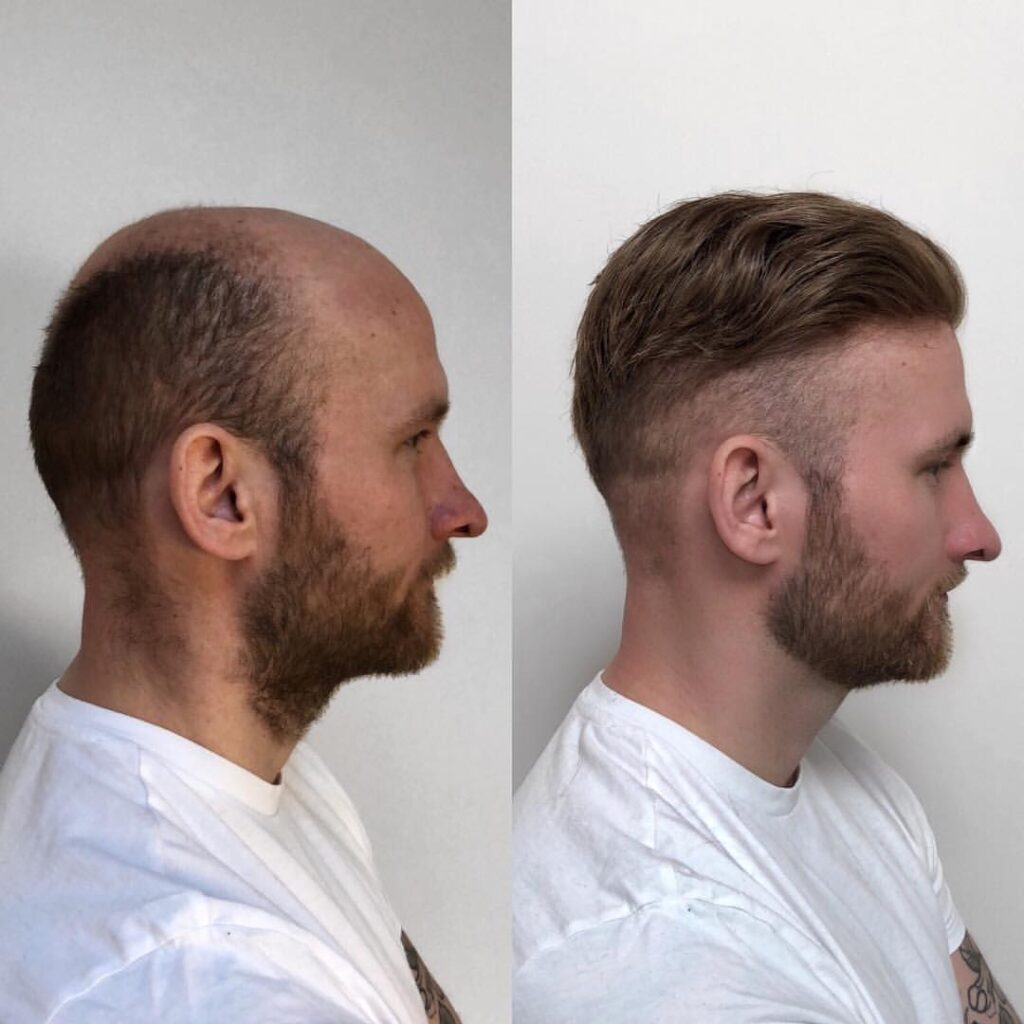
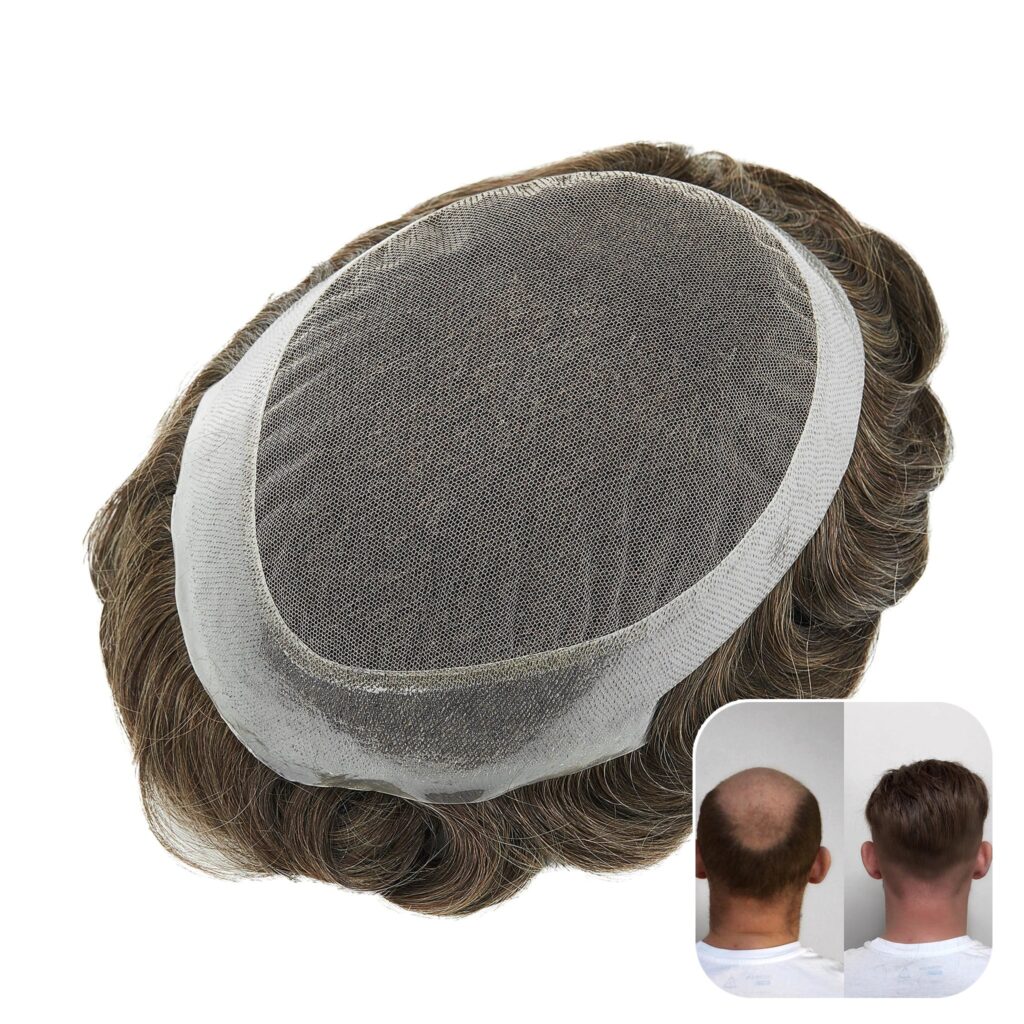
A hair system is a non-surgical hair replacement piece made from human or synthetic hair attached to a thin base. It is fitted over a specific area of hair loss and can be cut, colored and styled to blend with the wearer’s existing hair.
Tämä yksinkertainen määritelmä kätkee taakseen useita valintoja. Alusta, peittokoko, hiusten väri, harmaiden prosenttiosuus, tiheys, tekstuuri ja kiinnitysmenetelmä vaikuttavat kaikki siihen, miltä järjestelmä näyttää ja tuntuu. Ei ole olemassa yhtä ainoaa “parasta” yhdistelmää kaikille.
Tämä opas selittää nämä valinnat selkeällä kielellä, jotta voit valmistautua ensimmäiseen tilaukseen teeskentelemättä tuntevasi teknisiä tietoja, joita et ole vielä vahvistanut.
Nopea vastaus: miten hiusjärjestelmä toimii?
Hiukset ilmastoidaan, ruiskutetaan tai kiinnitetään muulla tavoin alustaan, joka on valmistettu pitsistä, polyuretaanista, monofilamenttimateriaalista tai näiden yhdistelmästä. Alusta asetetaan päänahkaa vasten ja kiinnitetään menetelmällä, joka sopii tuotteelle ja käyttäjälle, kuten teipillä, nestemäisellä liimalla, klipseillä tai salongeissa tehtävällä sovituksella.
Kun se on paikallaan, hiukset leikataan ja sekoitetaan ympäröiviin hiuksiin. Lopputulos riippuu järjestelmän sovittamisesta henkilöön – ei pelkästään ohuimman alustan tai kalleimpien hiusten valitsemisesta.
Hiusjärjestelmä, tupee vai peruukki: mitä eroa niillä on?
Näitä sanoja käytetään joskus synonyymeinä, mutta ne eivät aina kuvaa samaa peittoa tai ostoprosessia.
| Termi | Tyypillinen merkitys | Yleinen peitto | Valinnan pääpainopiste |
|---|---|---|---|
| Hiusjärjestelmä | Sovitettu, ei-kirurginen korvaus, joka on suunniteltu tietylle hiustenlähtöalueelle | Osittainen tai laaja | Alusta, koko, hiusten tekniset tiedot ja kiinnitysrutiini |
| Hiuslisäke | A traditional term often used for a men’s partial hairpiece | Yleensä päälaki, kruunu tai etuosa | Blending with the wearer’s own hair |
| Peruukki | Kappale, joka peittää yleensä koko päänahan | Koko pää | Kapan rakenne, istuvuus, tyyli ja kokonaispeitto |
Käytännössä myyjä saattaa kutsua samaa osittaista tuotetta hiusjärjestelmäksi, hiustenkorvausjärjestelmäksi, hiuskappaleeksi tai tupeeksi. Lue koko- ja rakenne yksityiskohdat sen sijaan, että luottaisit pelkkään nimeen.
For a deeper first-order overview, see ReHair’s Beginner’s Guide.
Kuka voi harkita hiusjärjestelmää?
Hiusjärjestelmä voi sopia henkilölle, joka haluaa ei-kirurgisen tavan peittää harventumista tai hiustenlähtöä ja joka on valmis sovitus- ja hoitorutiiniin. Se voi sopia myös kokeneille käyttäjille, jotka jo tuntevat alustansa, kokonsa, värinsä ja tiheytensä ja haluavat toistaa tutun teknisen määritelmän.
Yleisiä aloitustilanteita ovat:
- harventuminen päällä, kun käyttökelpoisia hiuksia on jäljellä sivuilla ja takana;
- hiustenlähtö tai -menetys keskittyneenä etuhiusrajaan;
- harventuva kruunu tai muu pienempi alue, joka ei vaadi täyttä peittoa;
- tarve tietylle kihartumiselle, tekstuurille, tiheydelle tai räätälöidylle alustan muodolle;
- mieltymys irrotettavaan vaihtoehtoon kirurgisen toimenpiteen sijaan.
Hiusjärjestelmä ei diagnosoi tai hoida hiustenlähdön syytä. Hiustenlähdöllä voi olla erilaisia syitä, ja NHS neuvoo hakeutumaan kliiniseen apuun, jos olet huolissasi siitä. Jos hiustenlähtö on äkillistä, epätasaista, kivuliasta, tulehtunutta tai muuten selittämätöntä, keskustele pätevän terveydenhuollon ammattilaisen kanssa ennen kuin käsittelet sitä pelkästään kosmeettisena huolenaiheena.
Viisi päätöstä ennen ensimmäistä tilausta
Sinun ei tarvitse muistaa jokaista teknistä termiä etukäteen. Tarvitset kuitenkin tarpeeksi tietoa välttääksesi valitsemisen pelkän mallikuvan perusteella. Aloita peitosta ja käy sitten läpi rakenne ja hiusten tekniset tiedot.
1. Which area needs coverage?
Coverage comes first because it determines the base size and product category. A standard top system, frontal piece, crown patch and full-cap solution are not interchangeable.
Measure the area you intend to cover and compare it with the listed base dimensions. If a stock base is larger than required, check whether that model can be cut down safely and how the alteration affects its construction. Do not assume every base can be trimmed in the same way.
2. Which base fits your routine?
The base is the material that supports the hair and sits against the scalp. ReHair’s current guidance is that there is no universal best base: climate, attachment routine, removal frequency and priorities all matter.
| Base family | What it can offer | Tradeoff to consider | A practical starting point |
|---|---|---|---|
| Lace | Airflow and a light feel | Adhesive cleanup through the mesh can require care | Hot climates, active routines or people who prioritize breathability |
| Thin skin | A low-profile surface and straightforward adhesive cleanup | Less airflow; very thin material needs gentle handling | Exposed hairlines or wearers who prioritize a scalp-like finish |
| Mono | More structure for repeat handling and fuller densities | Heavier and less sheer than fine lace or very thin skin | Durability-first routines or people who prefer a firmer base |
| Hybrid | Combines materials, such as lace with a polyurethane perimeter | Inherits some tradeoffs from both materials | First-time wearers or mixed priorities such as airflow plus easier perimeter attachment |
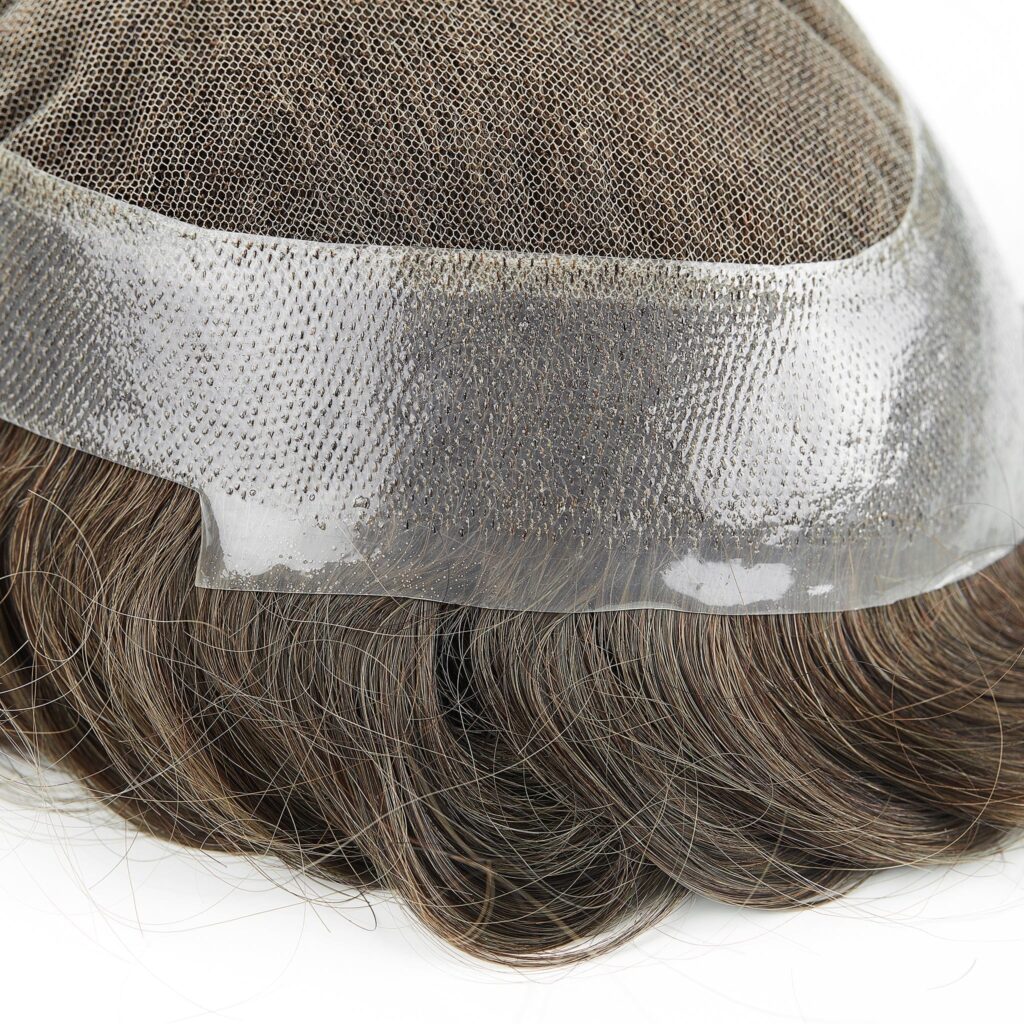
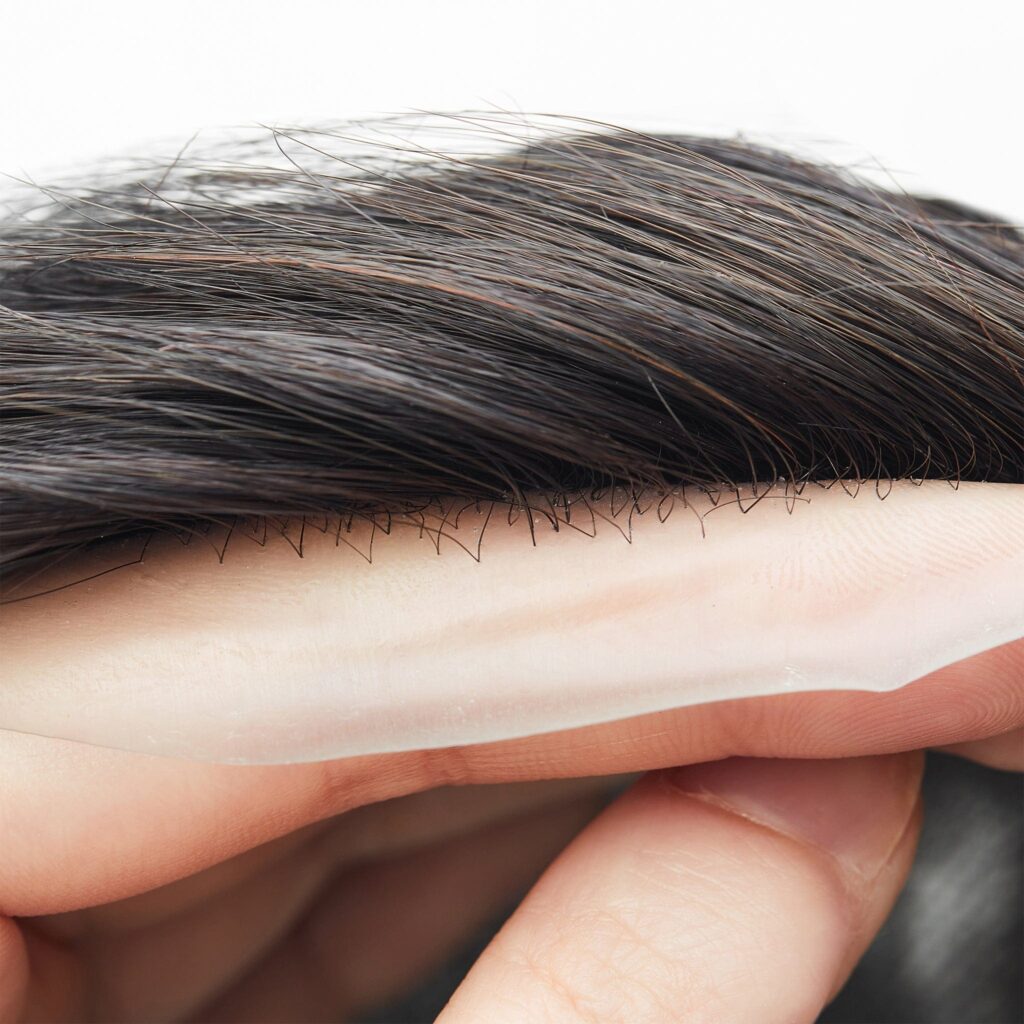
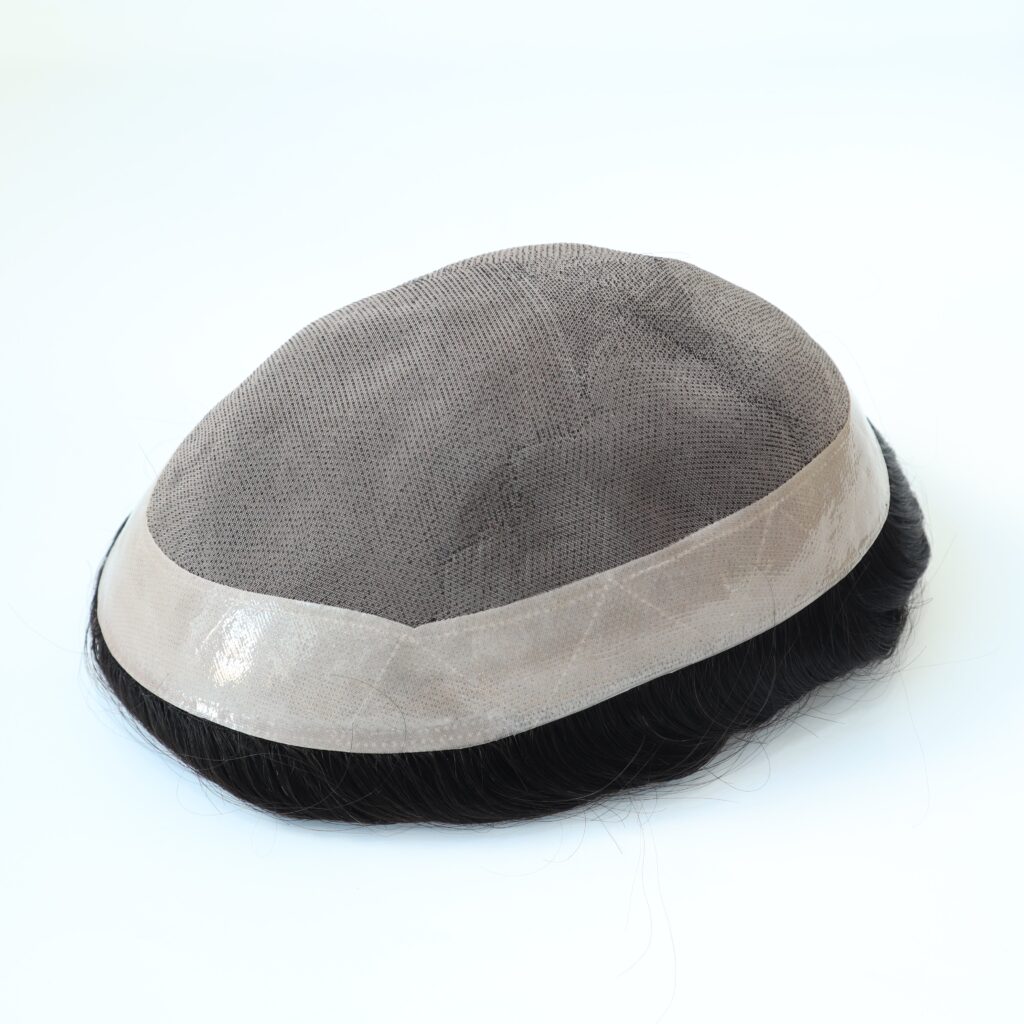
This is a decision framework, not a durability or appearance guarantee. Use the Hair System Base Selector for a routine-based recommendation, or compare the base types before choosing.
3. What size and shape do you need?
Base size should match the area being covered and leave enough surrounding hair for a clean blend where applicable. Too large can cover healthy hair unnecessarily; too small can leave the edge of the loss area exposed.
Stock systems use preset dimensions. Some can be cut to a smaller shape, while others have features—such as a reinforced perimeter or a specific front construction—that limit where material should be removed. A custom system is more appropriate when the required shape, size or contour does not fit a stock option.
4. Which color and gray percentage match?
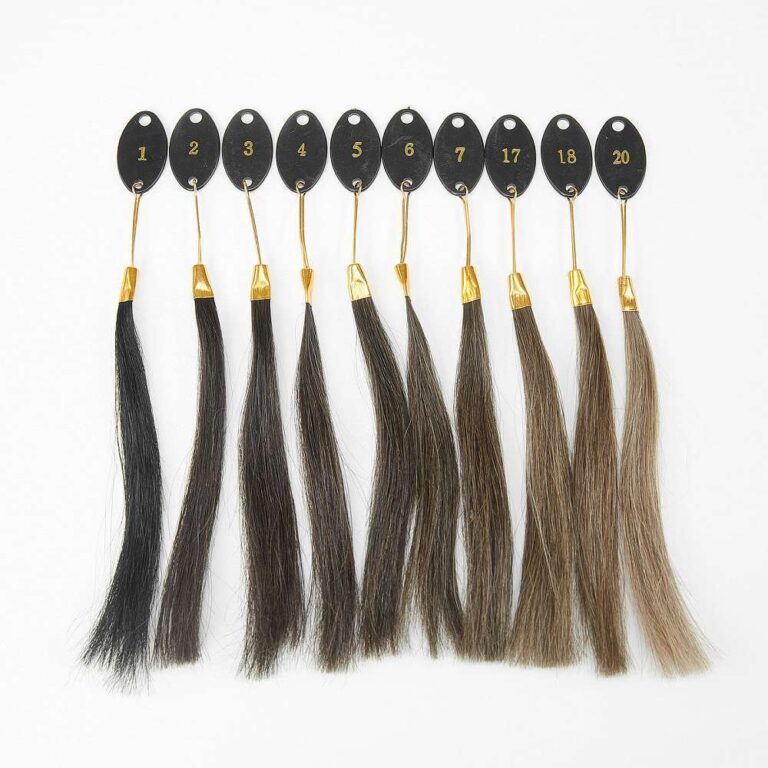
Hair color is easier to judge from several strands than from a single screen photo. Indoor light, phone processing and monitor settings can all shift how a shade appears.
Compare the system with hair from the sides or back that will remain visible. Confirm the base color code, any gray percentage and whether the gray is distributed or concentrated in a particular area. ReHair’s Hair Color Guide is a useful reference, but a physical color sample or clear natural-light photos may be safer for a close match.
5. What density, texture and length will blend?
Density describes how much hair is distributed across the base. More density is not automatically more natural. The right amount should relate to the wearer’s existing hair, preferred style, age presentation and base construction.
Texture and curl also need to match the intended finished style. Straight, wavy, curly and coily specifications should not be treated as visual labels alone. Length needs to leave enough hair for the cut-in while remaining suitable for the selected product and style.
Stock or custom: which should a first-time buyer choose?
A stock system uses a preset base, size range and available hair specifications. A custom system is built around selected measurements and details. The better route depends on how closely a stock option matches the required specification and how much variation the wearer needs.
A stock system may make sense when:
- the coverage area fits a standard base size;
- an available color, density and texture are close to the required result;
- the base can be adjusted without removing an important construction feature;
- the wearer wants to start from an established product configuration.
A custom system may make sense when:
- the base needs a non-standard shape or exact contour;
- color, gray distribution, curl, density or hair direction needs more control;
- a previous unit is being used as a reference for measurements and construction;
- the required combination is not available as a stock product.
Custom does not mean every result can be reproduced perfectly from a photo or old unit. Measurements, reference quality, material availability and confirmed specifications still matter. Browse current custom hair systems to understand the available route before sending a request.
Attachment and the cut-in: what happens after the system arrives?
Attachment holds the base in the intended position. A cut-in is the haircut and blending work performed after the system is placed, so its length and shape transition into the wearer’s existing hair and chosen style.
Tape and liquid adhesives are common, but the suitable method depends on the base, wear routine, skin response and product instructions. Clips or other removable methods may be possible for selected constructions and sufficient existing hair. Do not copy another wearer’s adhesive schedule without checking the product you are using.
Before a first attachment:
- Read the instructions for the specific base, adhesive and remover.
- Confirm where the front edge should sit before exposing tape or applying adhesive.
- Patch-test products as directed and stop if irritation develops.
- Decide whether the cut-in will be done by an experienced salon or at home.
- Keep the correct remover and cleaning supplies available before attachment.
A technically good system can still look wrong if it is placed too low, cut without a plan or paired with an unsuitable density. Treat fitting as part of the product decision, not an afterthought.
What maintenance is actually involved?
A hair system is a wearable product that needs cleaning, detangling, reattachment and periodic inspection. The schedule is not universal. It changes with the base, adhesive, scalp condition, climate, activity level, styling products and how often the system is removed.
A practical routine usually includes:
- following the care instructions for the hair and base;
- removing adhesive residue without stretching or tearing the material;
- supporting the hair while washing and detangling;
- limiting unnecessary heat, friction and harsh product buildup;
- checking the base and front edge before reattachment;
- replacing or repairing the system when its condition no longer supports the intended result.
Swimming, showering, sleeping and exercise may be possible with some systems and attachment routines, but they can also add moisture, heat, friction or adhesive stress. Follow the instructions for the actual system and attachment products rather than assuming one answer applies to every wearer.
First hair system checklist
Before ordering, write down the answers you know and mark anything that still needs confirmation.
- Area to cover: top, front, crown, patch or full scalp
- Base measurements and intended shape
- Preferred wear and removal routine
- Climate, exercise and perspiration level
- Base priority: airflow, low profile, cleanup or durability
- Hair color code and gray percentage
- Density and texture
- Hair length and intended finished style
- Attachment method and products
- Cut-in plan
- Stock or custom route
- Natural-light photos or an old-unit reference, if needed
If several answers are still uncertain, start with the Base Selector rather than guessing. Experienced wearers who already know their specifications can go directly to the current miesten hiusjärjestelmät.
Frequently asked questions
Do I need to shave my head for a hair system?
It depends on the coverage and attachment method. Bonded systems are commonly fitted to a prepared area so the base can sit flat and the adhesive can contact the scalp. Some removable or clip-based options may use existing hair. Confirm the fitting method before cutting or shaving anything.
Can a hair system look natural?
It can produce a convincing result when the base, hairline, color, gray, density, texture, placement and cut-in work together. No responsible guide can promise that every system will be invisible in every light or at every distance.
How long does a hair system last?
There is no reliable universal lifespan. Base thickness and construction matter, but handling, cleaning, attachment, removal frequency, climate, hair density and daily wear also affect condition. Use product-specific guidance and inspect the unit rather than planning around one fixed number of months.
Can I shower, swim or exercise while wearing one?
The answer depends on the system and attachment products. Water, heat, sweat and friction affect materials and bonds differently. Check the instructions for the selected base, tape or adhesive, and ask for product-specific guidance if these activities are part of your normal routine.
What is a hair system cut-in?
A cut-in is the final haircut and blending process after the system is positioned. The stylist shapes the system hair and connects it visually with the wearer’s existing hair. It is one of the main factors in the finished appearance.
Is a custom hair system always better than a stock one?
No. A stock system can be the simpler choice when its size and specifications already fit the wearer. Custom is useful when shape, measurements, color, density, curl or construction need more control. The goal is an accurate specification, not the word “custom” by itself.
Kuinka paljon hiusjärjestelmä maksaa?
Cost depends on the system, hair, base, length, custom work, finishing services, attachment supplies and ongoing maintenance. Check current product pricing and include fitting and care costs in the budget. A separate ReHair cost guide will cover this calculation in detail.
A sensible next step
Your first decision is not “Which product photo do I like?” It is “What needs to be covered, and what routine must the system fit?” Once those answers are clear, base, size, color and density become much easier to compare.
Käytä ReHairin three-question Base Selector for a starting direction. If your measurements or hair specifications fall outside a stock option, compare the mukautettu hiusjärjestelmä route before ordering.

 English
  Français
  Deutsch
  Español
  Português
  Italiano
  Nederlands (Formeel)
  Suomi
Suomi  Svenska
  Čeština
  Dansk
Dansk  Ελληνικά
  Magyar
  Polski