
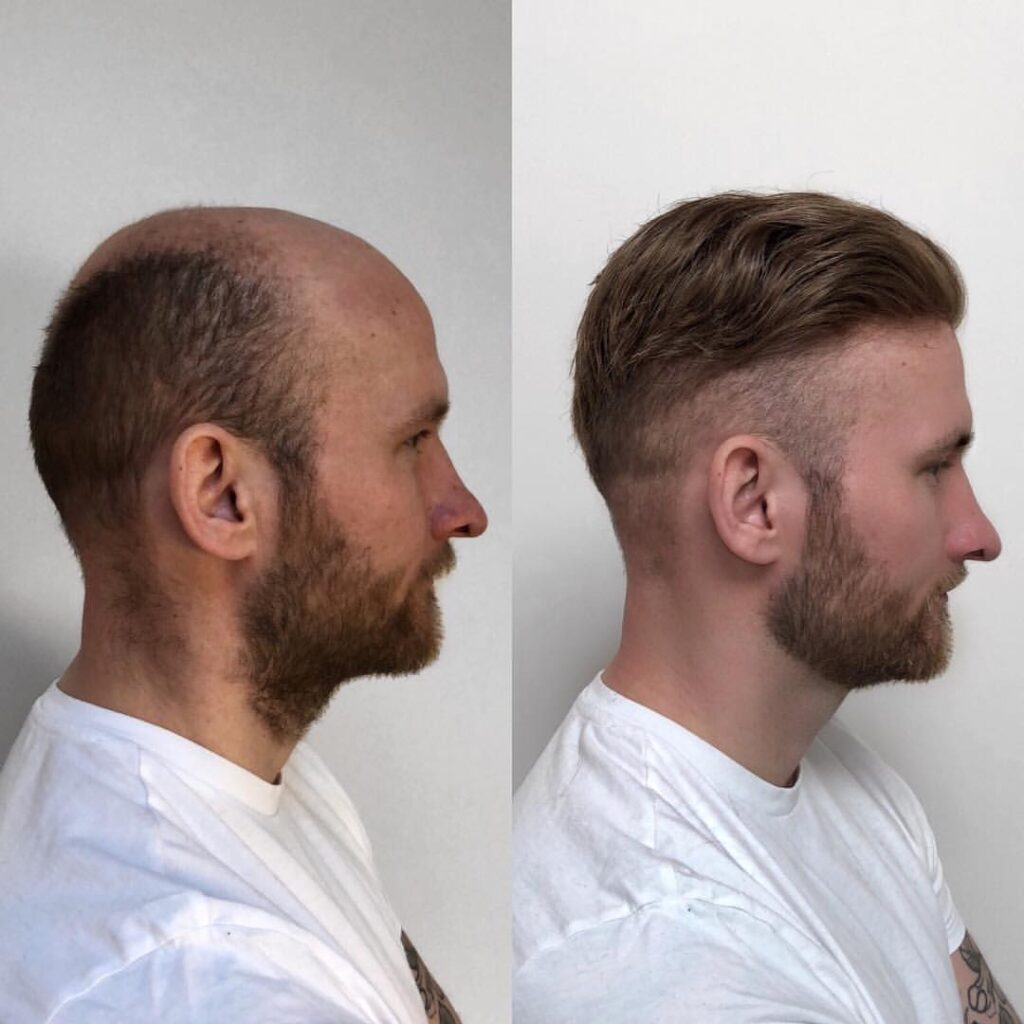
System włosowy to niechirurgiczny element zastępujący włosy, wykonany z włosów naturalnych lub syntetycznych, zamocowany na cienkiej bazie. Jest dopasowywany do określonego obszaru utraty włosów i można go przycinać, farbować oraz stylizować, aby wtapiał się w istniejące włosy użytkownika.
Ta prosta definicja skrywa kilka wyborów. Baza, rozmiar pokrycia, kolor włosów, procent siwych włosów, gęstość, tekstura i metoda mocowania – wszystko to wpływa na wygląd i odczucie systemu. Nie ma jednej “najlepszej” kombinacji dla wszystkich.
Ten przewodnik wyjaśnia te wybory prostym językiem, abyś mógł przygotować się do pierwszego zamówienia, nie udając, że znasz specyfikacje, których jeszcze nie potwierdziłeś.
Krótka odpowiedź: jak działa system włosowy?
Włosy są wentylowane, wtryskiwane lub inaczej mocowane do bazy wykonanej z koronki, skóry poliuretanowej, materiału monofilamentowego lub ich kombinacji. Baza przylega do skóry głowy i jest mocowana metodą dostosowaną do produktu i użytkownika, taką jak taśma, klej w płynie, klipsy lub rozwiązanie dopasowane w salonie.
Po umieszczeniu włosy są strzyżone i mieszane z otaczającymi włosami. Efekt końcowy zależy od dopasowania systemu do osoby — nie tylko od wyboru najcieńszej bazy czy najdroższych włosów.
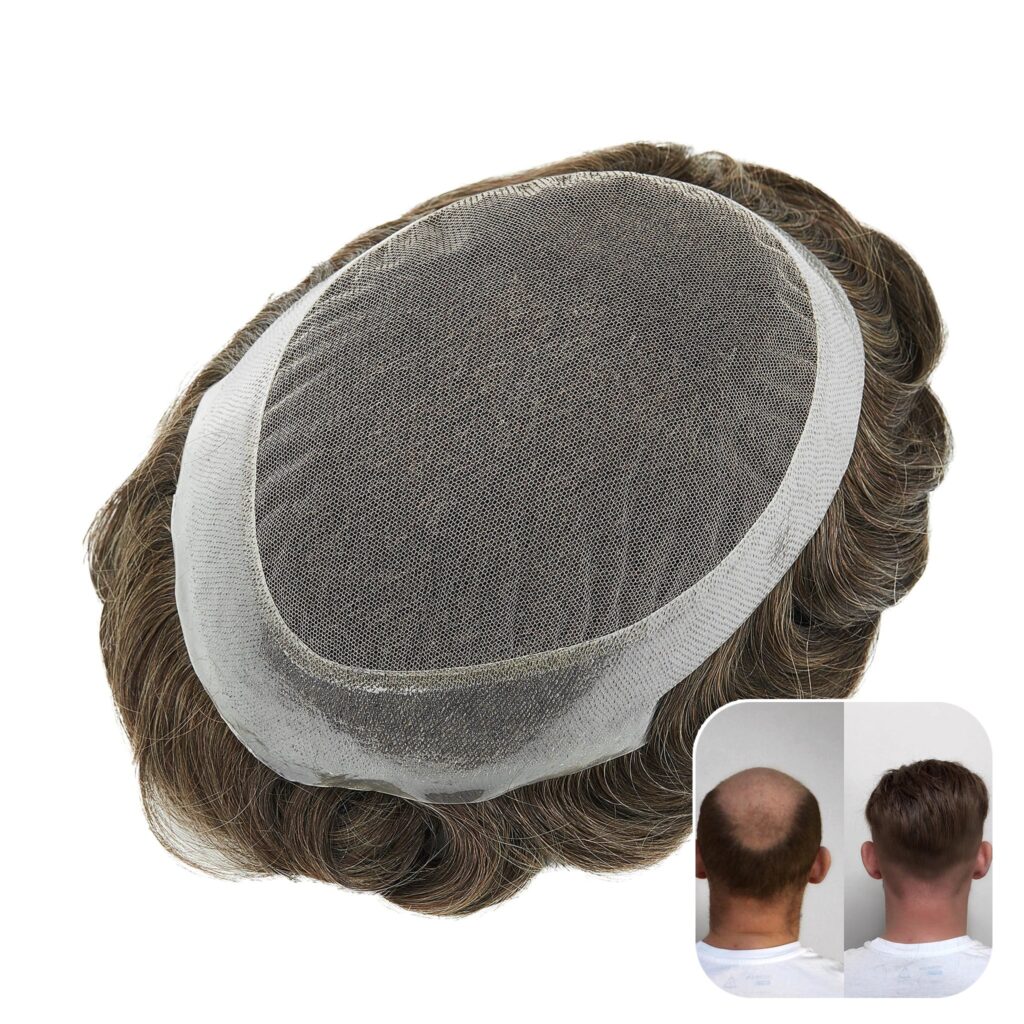
System włosowy, peruka na klej czy peruka: jaka jest różnica?
Te słowa są czasami używane zamiennie, ale nie zawsze opisują to samo pokrycie lub proces zakupu.
| Termin | Typowe znaczenie | Typowe pokrycie | Główny nacisk przy wyborze |
|---|---|---|---|
| System włosów | Dopasowana, niechirurgiczna alternatywa przeznaczona dla określonego obszaru utraty włosów | Częściowe lub rozległe | Baza, rozmiar, specyfikacja włosów i rutyna mocowania |
| Peruka | Tradycyjny termin często używany na określenie częściowej peruki męskiej | Zazwyczaj góra, korona lub przód | Wtapianie we własne włosy użytkownika |
| Peruka | Element, który zazwyczaj pokrywa całą skórę głowy | Pełna głowa | Konstrukcja czepka, dopasowanie, styl i ogólne pokrycie |
W praktyce sprzedawca może nazywać ten sam częściowy produkt systemem włosów, systemem zastępowania włosów, przednim włosem lub tupecikiem. Czytaj szczegóły dotyczące rozmiaru i konstrukcji, zamiast polegać wyłącznie na nazwie.
Aby uzyskać głębszy ogólny przegląd, zobacz ReHair Poradnik dla początkujących.
Kto może rozważyć system włosowy?
System włosów może być odpowiedni dla kogoś, kto szuka niechirurgicznego sposobu na pokrycie przerzedzenia lub utraty włosów i akceptuje rutynowe dopasowanie oraz pielęgnację. Może też pasować doświadczonym użytkownikom, którzy znają już swoją podstawę, rozmiar, kolor i gęstość i chcą odtworzyć znaną specyfikację.
Typowe sytuacje wyjściowe obejmują:
- przerzedzenie na górze, podczas gdy użyteczne włosy pozostają po bokach i z tyłu;
- cofnięcie lub utrata skoncentrowana wokół przedniej linii włosów;
- przerzedzona korona lub inny mniejszy obszar, który nie wymaga pełnego pokrycia;
- potrzebę określonego skrętu, tekstury, gęstości lub niestandardowego kształtu podstawy;
- preferencję opcji zdejmowanej zamiast zabiegu chirurgicznego.
System włosów nie diagnozuje ani nie leczy przyczyny utraty włosów. Utrata włosów może mieć różne przyczyny, a NHS zaleca szukanie pomocy klinicznej, jeśli się tym martwisz. Jeśli utrata jest nagła, ogniskowa, bolesna, zapalna lub w inny sposób niewyjaśniona, porozmawiaj z wykwalifikowanym pracownikiem ochrony zdrowia, zanim potraktujesz ją wyłącznie jako kwestię kosmetyczną.
Pięć decyzji do podjęcia przed pierwszym zamówieniem
Nie musisz przychodzić z zapamiętanymi wszystkimi terminami technicznymi. Potrzebujesz jednak wystarczającej ilości informacji, aby nie wybierać wyłącznie na podstawie zdjęcia modela. Zacznij od pokrycia, a następnie przeanalizuj konstrukcję i specyfikację włosów.
1. Który obszar wymaga pokrycia?
Pokrycie jest najważniejsze, ponieważ określa rozmiar podstawy i kategorię produktu. Standardowy system na górę, element frontalny, płat na koronę i rozwiązanie pełnoczepkowe nie są wymienne.
Zmierz obszar, który zamierzasz pokryć, i porównaj go z podanymi wymiarami podstawy. Jeśli dostępna podstawa jest większa niż to konieczne, sprawdź, czy ten model można bezpiecznie przyciąć i jak modyfikacja wpływa na jego konstrukcję. Nie zakładaj, że każdą podstawę można przyciąć w ten sam sposób.
2. Która baza pasuje do Twojej rutyny?
Podstawa to materiał, który podtrzymuje włosy i przylega do skóry głowy. Aktualne wskazówki ReHair są takie, że nie ma uniwersalnie najlepszej podstawy: klimat, rutyna mocowania, częstotliwość zdejmowania i priorytety – wszystko ma znaczenie.
| Rodzina podstaw | Co może zaoferować | Kompromis do rozważenia | Praktyczny punkt wyjścia |
|---|---|---|---|
| Tyl | Przepływ powietrza i lekkie uczucie | Czyszczenie kleju przez siateczkę może wymagać ostrożności | Gorący klimat, aktywny tryb życia lub osoby, które priorytetowo traktują oddychalność |
| Cienka skóra | Niskoprofilowa powierzchnia i proste czyszczenie kleju | Mniejszy przepływ powietrza; bardzo cienki materiał wymaga delikatnego obchodzenia się | Odsłonięte linie włosów lub użytkownicy, którzy priorytetowo traktują wygląd przypominający skórę głowy |
| Mono | Więcej struktury do wielokrotnego użytkowania i pełniejsze gęstości | Cięższa i mniej przezroczysta niż delikatny tyl lub bardzo cienka skóra | Rutyny nastawione na trwałość lub osoby preferujące solidniejszą podstawę |
| Hybryda | Łączy materiały, takie jak tyl z obwódką z poliuretanu | Odziedzicza pewne kompromisy po obu materiałach | Osoby noszące po raz pierwszy lub o mieszanych priorytetach, takich jak przepuszczalność powietrza plus łatwiejsze mocowanie obwodowe |
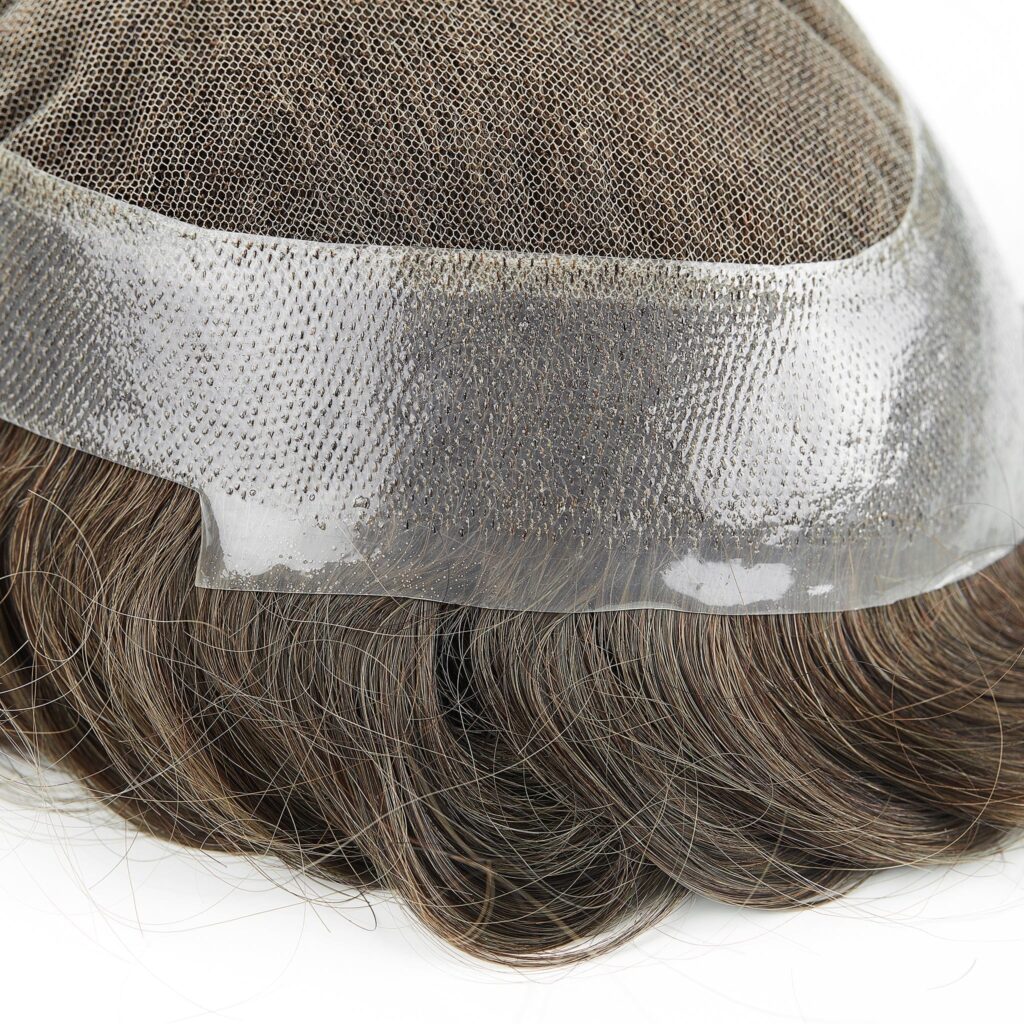
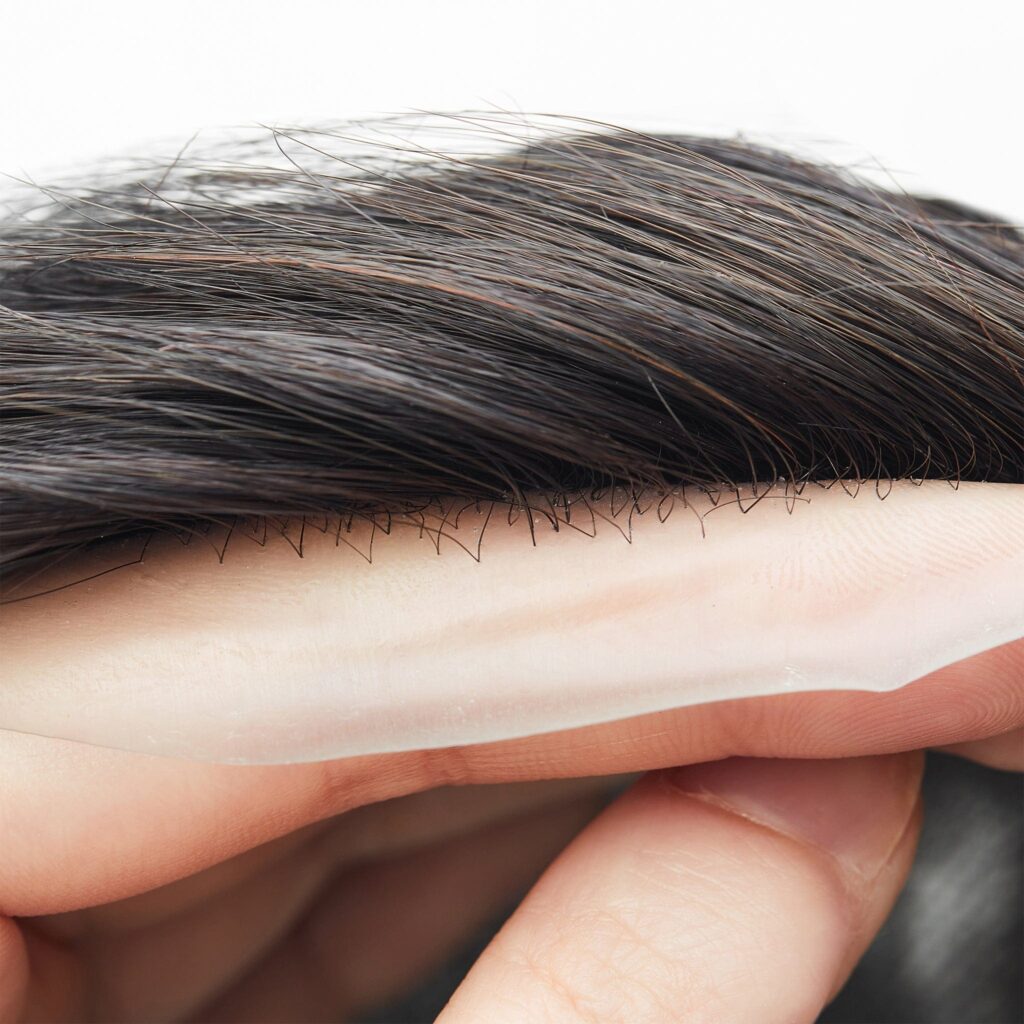
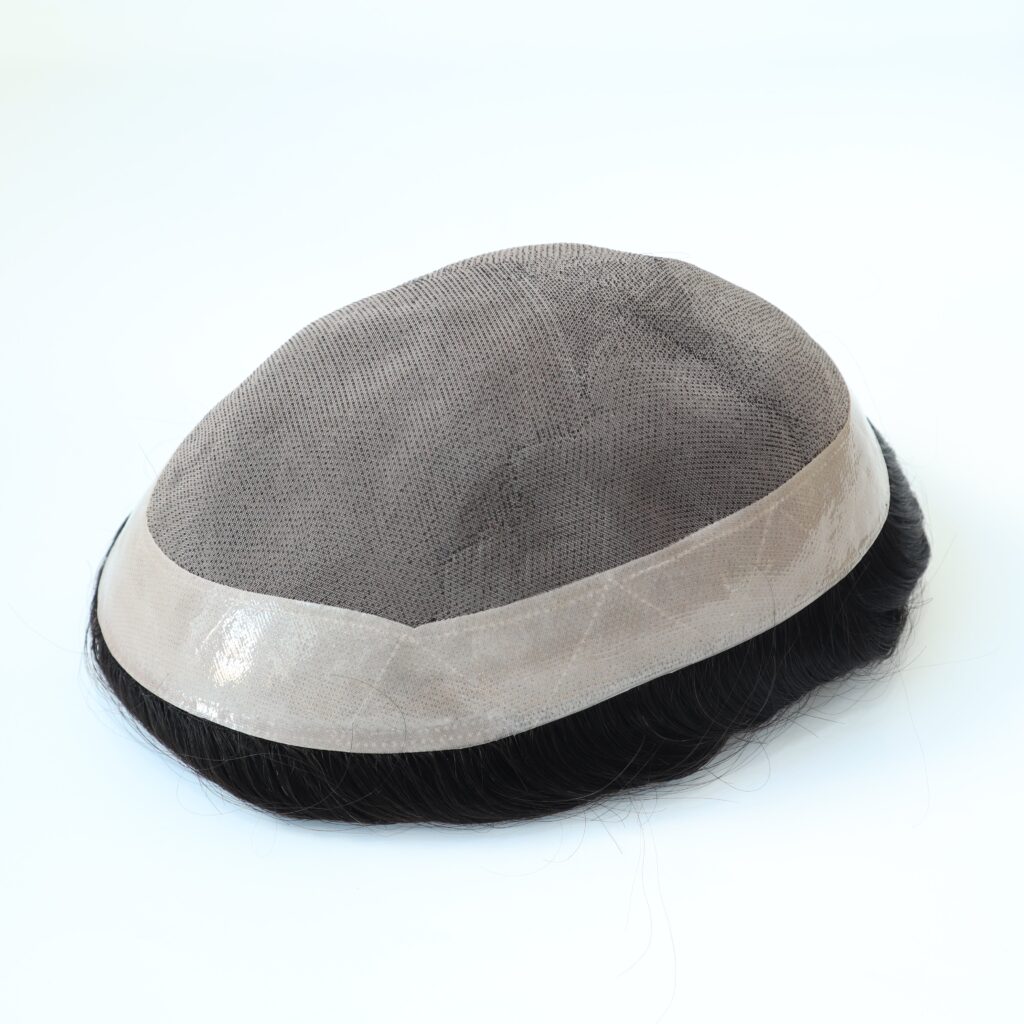
To są ramy decyzyjne, a nie gwarancja trwałości lub wyglądu. Użyj Selektora bazy systemu włosów aby uzyskać rekomendację opartą na rutynie, lub porównaj typy baz przed wyborem.
3. Jaki rozmiar i kształt są Ci potrzebne?
Rozmiar bazy powinien pasować do obszaru, który ma być pokryty, i pozostawiać wystarczająco dużo otaczających włosów dla czystego przejścia, jeśli ma to zastosowanie. Zbyt duży może niepotrzebnie zakrywać zdrowe włosy; zbyt mały może pozostawić krawędź obszaru utraty włosów odsłoniętą.
Systemy magazynowe mają ustalone wymiary. Niektóre można przyciąć do mniejszego kształtu, podczas gdy inne mają cechy — takie jak wzmocniony obwód lub określona konstrukcja przednia — które ograniczają, gdzie materiał powinien być usunięty. System na zamówienie jest bardziej odpowiedni, gdy wymagany kształt, rozmiar lub kontur nie pasuje do opcji magazynowej.
4. Który kolor i procent siwych włosów pasują?
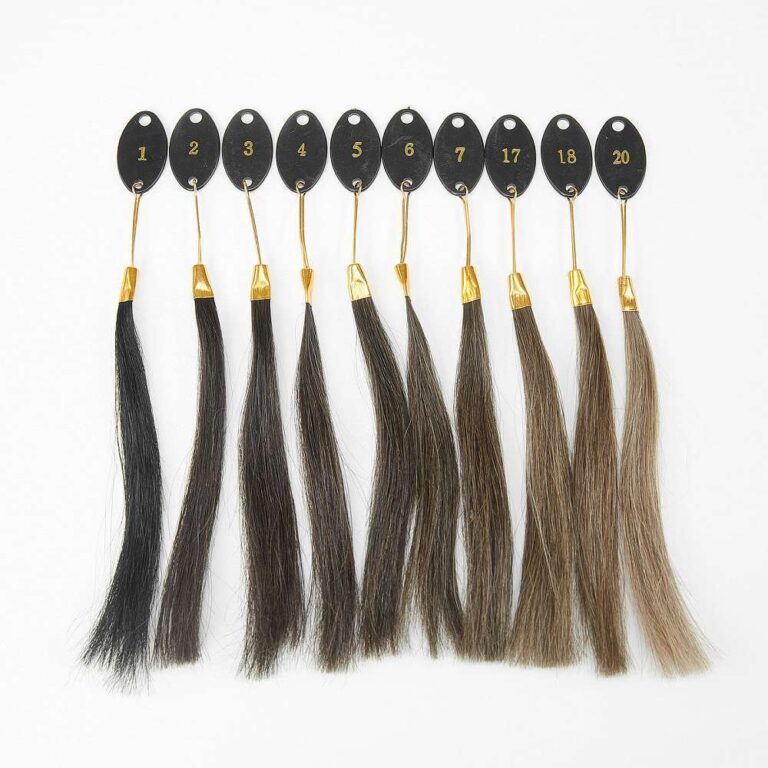
Kolor włosów łatwiej ocenić na podstawie kilku pasemek niż pojedynczego zdjęcia na ekranie. Oświetlenie w pomieszczeniu, przetwarzanie w telefonie i ustawienia monitora mogą zmienić wygląd odcienia.
Porównaj system z włosami z boków lub tyłu, które pozostaną widoczne. Potwierdź kod koloru bazy, wszelki procent siwych włosów oraz czy siwe włosy są rozłożone, czy skoncentrowane w określonym obszarze. ReHair Przewodnik po kolorach włosów jest użytecznym odniesieniem, ale fizyczna próbka koloru lub wyraźne zdjęcia w naturalnym świetle mogą być bezpieczniejsze dla dokładnego dopasowania.
5. Jaka gęstość, tekstura i długość będą się wtapiać?
Gęstość opisuje, ile włosów jest rozmieszczonych na bazie. Większa gęstość nie jest automatycznie bardziej naturalna. Właściwa ilość powinna odnosić się do istniejących włosów noszącego, preferowanego stylu, prezentacji wieku i konstrukcji bazy.
Tekstura i skręt również muszą pasować do zamierzonego stylu wykończenia. Specyfikacje proste, falowane, kręcone i mocno kręcone nie powinny być traktowane wyłącznie jako etykiety wizualne. Długość musi pozostawiać wystarczająco dużo włosów do wcięcia, pozostając odpowiednią dla wybranego produktu i stylu.
Na magazynie czy na zamówienie: co powinien wybrać kupujący po raz pierwszy?
System magazynowy używa ustalonej bazy, zakresu rozmiarów i dostępnych specyfikacji włosów. System na zamówienie jest budowany wokół wybranych wymiarów i szczegółów. Lepsza droga zależy od tego, jak blisko opcja magazynowa pasuje do wymaganej specyfikacji i ile zmienności potrzebuje noszący.
System magazynowy może mieć sens, gdy:
- obszar pokrycia pasuje do standardowego rozmiaru bazy;
- dostępny kolor, gęstość i tekstura są bliskie wymaganemu rezultatowi;
- bazę można dostosować bez usuwania ważnej cechy konstrukcyjnej;
- noszący chce zacząć od ustalonej konfiguracji produktu.
System na zamówienie może mieć sens, gdy:
- baza potrzebuje niestandardowego kształtu lub dokładnego konturu;
- kolor, rozmieszczenie siwych włosów, skręt, gęstość lub kierunek włosów wymagają większej kontroli;
- poprzednia jednostka jest używana jako odniesienie do pomiarów i konstrukcji;
- wymagana kombinacja nie jest dostępna jako produkt magazynowy.
Na zamówienie nie oznacza, że każdy rezultat można idealnie odtworzyć ze zdjęcia lub starej jednostki. Pomiary, jakość odniesienia, dostępność materiałów i potwierdzone specyfikacje nadal mają znaczenie. Przeglądaj aktualne systemy włosów na zamówienie aby zrozumieć dostępną drogę przed wysłaniem zapytania.
Mocowanie i wcięcie: co się dzieje po dostarczeniu systemu?
Mocowanie utrzymuje bazę w zamierzonej pozycji. Wcięcie to strzyżenie i praca nad blended wykonywana po umieszczeniu systemu, tak aby jego długość i kształt przechodziły w istniejące włosy noszącego i wybrany styl.
Taśma i kleje w płynie są powszechne, ale odpowiednia metoda zależy od bazy, rutyny noszenia, reakcji skóry i instrukcji produktu. Klipsy lub inne zdejmowane metody mogą być możliwe dla wybranych konstrukcji i wystarczającej ilości istniejących włosów. Nie kopiuj harmonogramu klejenia innego noszącego bez sprawdzenia używanego produktu.
Przed pierwszym mocowaniem:
- Przeczytaj instrukcje dotyczące konkretnej bazy, kleju i zmywacza.
- Potwierdź, gdzie powinna znajdować się przednia krawędź, przed odsłonięciem taśmy lub nałożeniem kleju.
- Przeprowadź test płatkowy produktów zgodnie z instrukcjami i przerwij, jeśli pojawi się podrażnienie.
- Zdecyduj, czy wcięcie zostanie wykonane przez doświadczony salon, czy w domu.
- Przed montażem przygotuj odpowiedni zmywacz i środki czystości.
Technicznie dobry system może nadal wyglądać źle, jeśli zostanie umieszczony zbyt nisko, obcięty bez planu lub połączony z nieodpowiednią gęstością. Traktuj dopasowanie jako część decyzji o produkcie, a nie coś, o czym myśli się na końcu.
Jaka pielęgnacja jest właściwie wymagana?
System włosów to produkt noszony na głowie, który wymaga czyszczenia, rozplątywania, ponownego mocowania i okresowych kontroli. Harmonogram nie jest uniwersalny. Zmienia się w zależności od bazy, kleju, stanu skóry głowy, klimatu, poziomu aktywności, produktów do stylizacji i tego, jak często system jest zdejmowany.
Praktyczna rutyna zwykle obejmuje:
- przestrzeganie instrukcji pielęgnacji włosów i bazy;
- usuwanie resztek kleju bez rozciągania lub rozrywania materiału;
- podtrzymywanie włosów podczas mycia i rozplątywania;
- ograniczanie niepotrzebnego ciepła, tarcia i gromadzenia się agresywnych produktów;
- sprawdzenie bazy i przedniej krawędzi przed ponownym mocowaniem;
- wymianę lub naprawę systemu, gdy jego stan nie pozwala już uzyskać zamierzonego efektu.
Pływanie, branie prysznica, spanie i ćwiczenia mogą być możliwe w przypadku niektórych systemów i metod mocowania, ale mogą też zwiększać wilgoć, ciepło, tarcie lub obciążenie kleju. Postępuj zgodnie z instrukcjami dotyczącymi konkretnego systemu i produktów do mocowania, zamiast zakładać, że jedna odpowiedź pasuje do każdego użytkownika.
Lista kontrolna przed pierwszym systemem włosowym
Przed zamówieniem zapisz odpowiedzi, które znasz, i zaznacz wszystko, co jeszcze wymaga potwierdzenia.
- Obszar do pokrycia: góra, przód, korona, płat lub cała skóra głowy
- Wymiary bazy i zamierzony kształt
- Preferowany tryb noszenia i zdejmowania
- Klimat, ćwiczenia i poziom pocenia się
- Priorytet bazy: przepuszczalność powietrza, niski profil, łatwość czyszczenia lub trwałość
- Kod koloru włosów i procent siwych
- Gęstość i struktura
- Długość włosów i zamierzona finalna stylizacja
- Metoda mocowania i produkty
- Plan cut-in
- Ścieżka ze stanu magazynowego lub na zamówienie
- Zdjęcia w naturalnym świetle lub odniesienie do starej jednostki, jeśli to potrzebne
Jeśli kilka odpowiedzi jest nadal niepewnych, zacznij od Selektor bazy zamiast zgadywać. Doświadczeni użytkownicy, którzy znają już swoje specyfikacje, mogą przejść bezpośrednio do aktualnej systemy do włosów dla mężczyzn.
Najczęściej zadawane pytania
Czy muszę golić głowę do systemu włosowego?
To zależy od pokrycia i metody mocowania. Systemy klejone są zwykle dopasowywane do przygotowanego obszaru, aby baza mogła leżeć płasko, a klej mógł mieć kontakt ze skórą głowy. Niektóre opcje zdejmowane lub na klipsy mogą wykorzystywać istniejące włosy. Potwierdź metodę dopasowania przed obcinaniem lub goleniem czegokolwiek.
Czy system włosów może wyglądać naturalnie?
Może dać przekonujący efekt, gdy baza, linia włosów, kolor, siwe włosy, gęstość, struktura, umiejscowienie i cut-in działają razem. Żaden odpowiedzialny przewodnik nie może obiecać, że każdy system będzie niewidoczny w każdym świetle i na każdą odległość.
Jak długo wytrzymuje system włosów?
Nie ma niezawodnej uniwersalnej trwałości. Grubość i konstrukcja bazy mają znaczenie, ale obchodzenie się, czyszczenie, mocowanie, częstotliwość zdejmowania, klimat, gęstość włosów i codzienne noszenie również wpływają na stan. Kieruj się wytycznymi dla konkretnego produktu i kontroluj jednostkę, zamiast planować w oparciu o jedną stałą liczbę miesięcy.
Czy mogę brać prysznic, pływać lub ćwiczyć, nosząc go?
Odpowiedź zależy od systemu i produktów do mocowania. Woda, ciepło, pot i tarcie różnie oddziałują na materiały i spoiny klejowe. Sprawdź instrukcje dla wybranej bazy, taśmy lub kleju i poproś o wytyczne dla konkretnych produktów, jeśli te aktywności są częścią Twojej codziennej rutyny.
Czym jest wkomponowanie systemu włosów?
Cut-in to końcowe strzyżenie i proces blendowania po umieszczeniu systemu. Stylista modeluje włosy systemu i wizualnie łączy je z istniejącymi włosami użytkownika. To jeden z głównych czynników wpływających na końcowy wygląd.
Czy system włosów na zamówienie jest zawsze lepszy od gotowego?
Nie. System ze stanu magazynowego może być prostszym wyborem, gdy jego rozmiar i specyfikacje już pasują do użytkownika. Zamówienie na miarę jest przydatne, gdy kształt, wymiary, kolor, gęstość, skręt lub konstrukcja wymagają większej kontroli. Celem jest dokładna specyfikacja, a nie samo słowo “custom”.
System włosów cena – ile kosztuje system włosów?
Koszt zależy od systemu, włosów, bazy, długości, pracy na zamówienie, usług wykończeniowych, materiałów do mocowania i bieżącej konserwacji. Sprawdź aktualne ceny produktów i uwzględnij w budżecie koszty dopasowania i pielęgnacji. Osobny przewodnik po kosztach ReHair omówi te obliczenia szczegółowo.
Rozsądny następny krok
Twoją pierwszą decyzją nie jest “Które zdjęcie produktu mi się podoba?”, lecz “Co ma być pokryte i do jakiej rutyny musi pasować system?”. Gdy te odpowiedzi są jasne, porównanie bazy, rozmiaru, koloru i gęstości staje się znacznie łatwiejsze.
Użyj Selektora bazy opartego na trzech pytaniach ReHair, aby uzyskać początkowy kierunek. Jeśli Twoje wymiary lub specyfikacje włosów wykraczają poza opcję ze stanu magazynowego, porównaj niestandardowy system włosów ścieżkę przed zamówieniem.

 English
  Français
  Deutsch
  Español
  Português
  Italiano
  Nederlands (Formeel)
  Suomi
Suomi  Svenska
  Čeština
  Dansk
Dansk  Ελληνικά
  Magyar
  Polski