
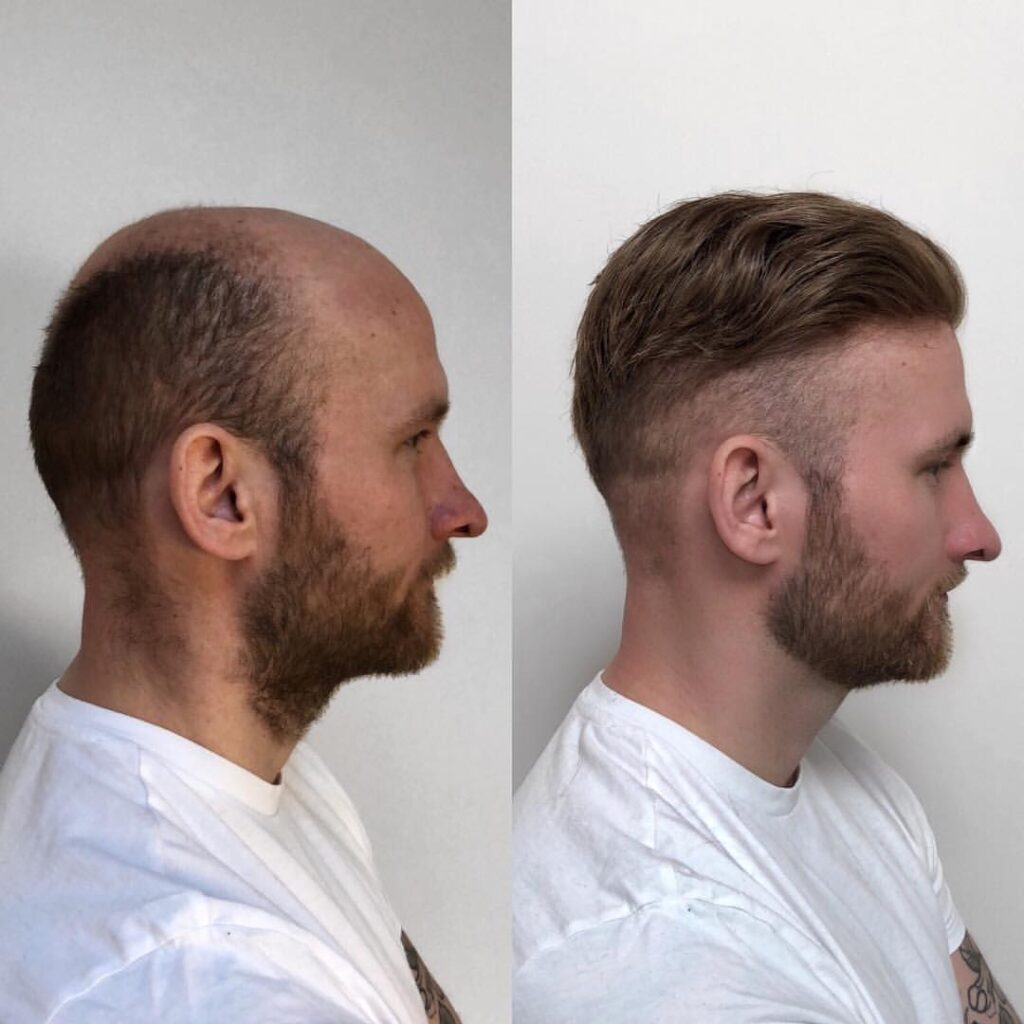
Uma prótese capilar é uma peça de substituição capilar não cirúrgica feita de cabelo humano ou sintético fixado a uma base fina. Ela é colocada sobre uma área específica de queda de cabelo e pode ser cortada, colorida e modelada para se misturar com o cabelo existente do usuário.
Essa definição simples esconde várias escolhas. A base, o tamanho da cobertura, a cor do cabelo, a percentagem de grisalhos, a densidade, a textura e o método de fixação afetam todos o aspeto e a sensação do sistema. Não existe uma única combinação “melhor” para todos.
Este guia explica essas escolhas em linguagem simples, para que possa preparar-se para um primeiro pedido sem fingir conhecer especificações que ainda não confirmou.
Resposta rápida: como funciona uma prótese capilar?
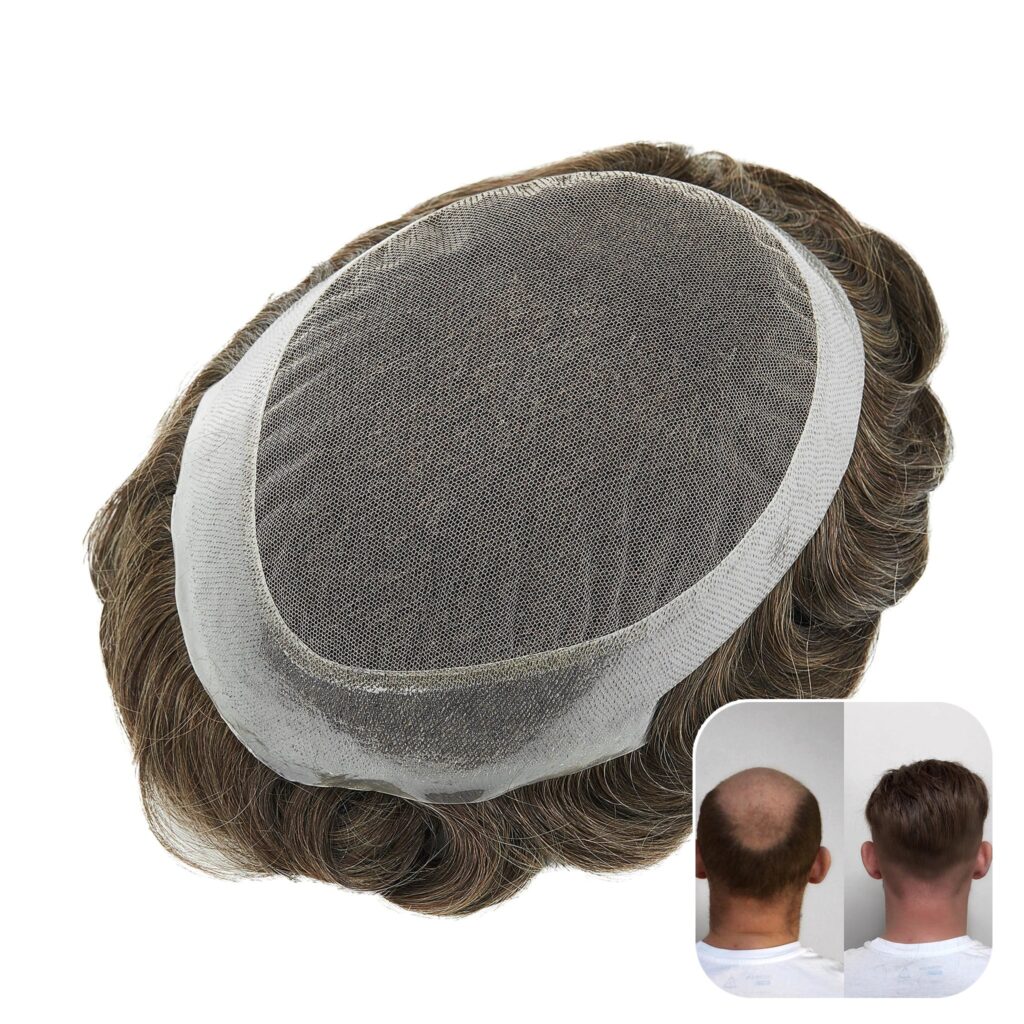
O cabelo é ventilado, injetado ou fixado de outra forma a uma base feita de renda, pele de poliuretano, material monofilamento ou uma combinação destes. A base assenta contra o couro cabeludo e é fixada usando um método adequado ao produto e ao usuário, como fita, adesivo líquido, clipes ou uma abordagem aplicada em salão.
Depois de posicionado, o cabelo é cortado e misturado com o cabelo circundante. O resultado final depende de adaptar o sistema à pessoa — não apenas de escolher a base mais fina ou o cabelo mais caro.
Prótese capilar, aplique ou peruca: qual é a diferença?
Estas palavras são por vezes usadas indistintamente, mas nem sempre descrevem a mesma cobertura ou processo de compra.
| Termo | Significado típico | Cobertura comum | Foco principal de seleção |
|---|---|---|---|
| Prótese capilar | Uma substituição ajustada e não cirúrgica concebida para uma área definida de perda de cabelo | Parcial ou extensa | Base, tamanho, especificações do cabelo e rotina de fixação |
| Toupee | Um termo tradicional frequentemente usado para uma prótese capilar parcial masculina | Normalmente topo, coroa ou frente | Misturando-se com o próprio cabelo do usuário |
| Peruca | Uma peça que geralmente cobre todo o couro cabeludo | Cabeça inteira | Construção da base, ajuste, estilo e cobertura geral |
Na prática, um vendedor pode chamar o mesmo produto parcial de prótese capilar, prótese capilar de reposição, aplique ou prótese capilar. Leia os detalhes de tamanho e construção em vez de confiar apenas no nome.
Para uma visão geral mais aprofundada de primeira ordem, consulte o Guia para Iniciantes.
Quem pode considerar uma prótese capilar?
Uma prótese capilar pode ser adequada para alguém que deseja uma maneira não cirúrgica de cobrir afinamento ou perda de cabelo e se sente confortável com uma rotina de adaptação e manutenção. Também pode servir para usuários experientes que já conhecem sua base, tamanho, cor e densidade e desejam reproduzir uma especificação familiar.
Situações iniciais comuns incluem:
- afinamento no topo enquanto ainda há cabelo utilizável nas laterais e atrás;
- recessão ou perda concentrada ao redor da linha frontal do cabelo;
- uma coroa afinada ou outra área menor que não requer cobertura total;
- uma necessidade de um cacheado, textura, densidade ou formato de base personalizado específico;
- uma preferência por uma opção removível em vez de um procedimento cirúrgico.
Uma prótese capilar não diagnostica nem trata a causa da perda de cabelo. A perda de cabelo pode ter diferentes causas, e o NHS aconselha buscar ajuda clínica se você estiver preocupado com isso. Se a perda for súbita, irregular, dolorosa, inflamada ou de outra forma inexplicável, fale com um profissional de saúde qualificado antes de tratá-la apenas como uma preocupação cosmética.
As cinco decisões a tomar antes do seu primeiro pedido
Você não precisa chegar com todos os termos técnicos memorizados. Você precisa de informações suficientes para evitar escolher apenas por uma foto de modelo. Comece pela cobertura, depois passe para a construção e as especificações do cabelo.
1. Que área precisa de cobertura?
A cobertura vem primeiro porque determina o tamanho da base e a categoria do produto. Um sistema de topo padrão, uma peça frontal, um aplique de coroa e uma solução de cobertura total não são intercambiáveis.
Meça a área que pretende cobrir e compare-a com as dimensões de base indicadas. Se uma base de stock for maior do que o necessário, verifique se esse modelo pode ser cortado em segurança e como a alteração afeta a sua construção. Não assuma que todas as bases podem ser aparadas da mesma forma.
2. Que base se adequa à sua rotina?
A base é o material que sustenta o cabelo e fica contra o couro cabeludo. A orientação atual da ReHair é que não existe uma base melhor universal: o clima, a rotina de fixação, a frequência de remoção e as prioridades são todos fatores importantes.
| Família de base | O que pode oferecer | Contrapartida a considerar | Um ponto de partida prático |
|---|---|---|---|
| Renda | Circulação de ar e sensação leve | A limpeza do adesivo através da malha pode exigir cuidado | Climas quentes, rotinas ativas ou pessoas que dão prioridade à respirabilidade |
| Pele fina | Uma superfície discreta e limpeza do adesivo simples | Menos circulação de ar; material muito fino exige manuseamento delicado | Linhas de cabelo expostas ou utilizadores que dão prioridade a um acabamento semelhante ao couro cabeludo |
| Mono | Mais estrutura para manuseamento repetido e densidades mais cheias | Mais pesada e menos transparente do que renda fina ou pele muito fina | Rotinas que priorizam a durabilidade ou pessoas que preferem uma base mais firme |
| Híbrida | Combina materiais, como renda com um perímetro de poliuretano | Herda algumas contrapartidas de ambos os materiais | Utilizadores iniciantes ou prioridades mistas, como circulação de ar e fixação de perímetro mais fácil |
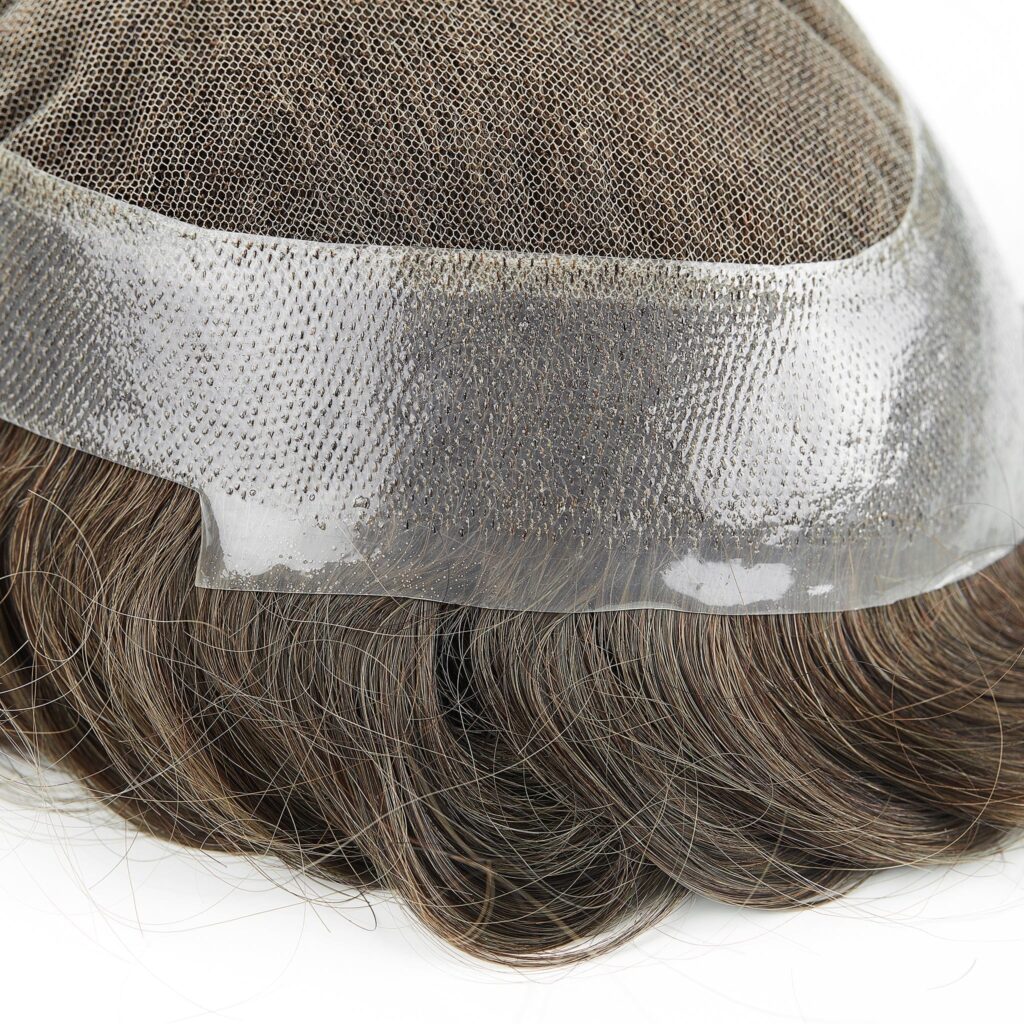
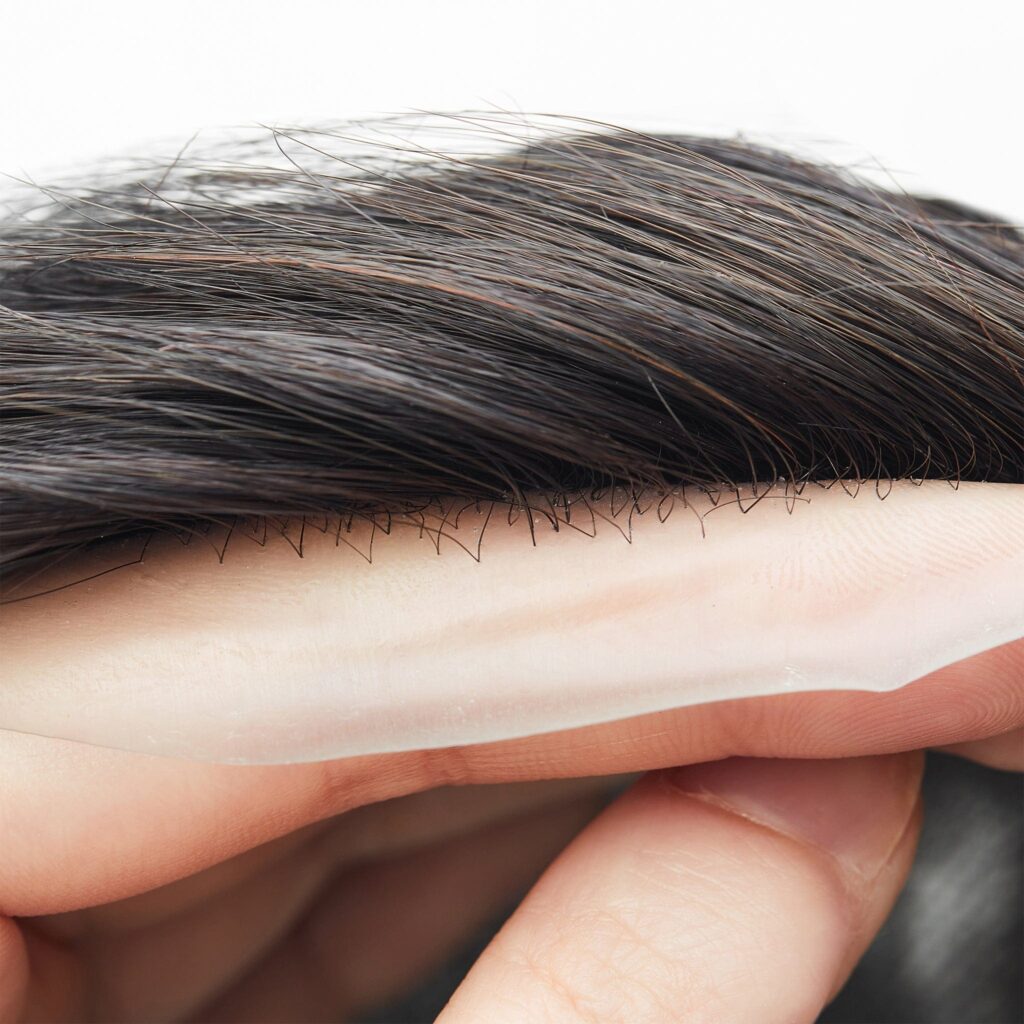
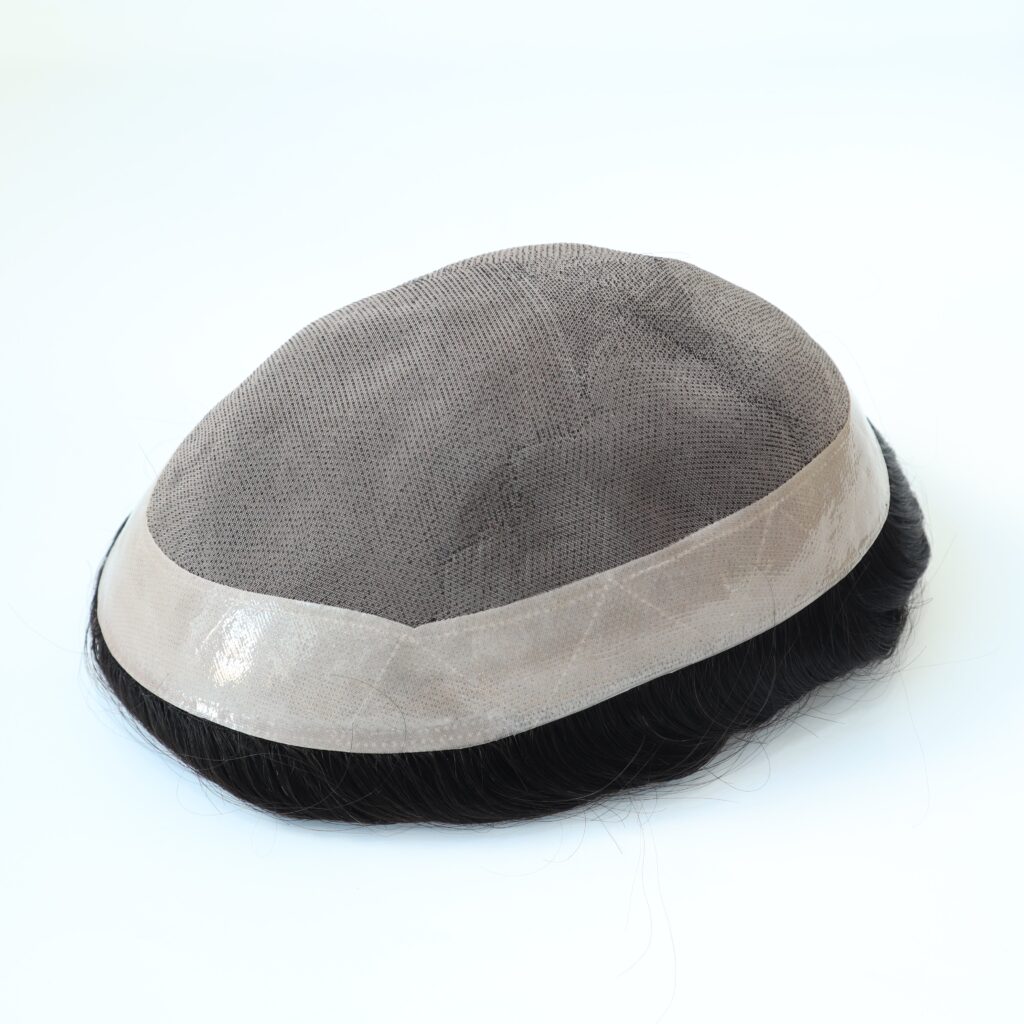
Este é um quadro de decisão, não uma garantia de durabilidade ou aparência. Utilize o Seletor de Base de Prótese Capilar para uma recomendação baseada na rotina, ou compare os tipos de base antes de escolher.
3. Que tamanho e forma precisa?
O tamanho da base deve corresponder à área a cobrir e deixar cabelo circundante suficiente para uma transição limpa, quando aplicável. Demasiado grande pode cobrir cabelo saudável desnecessariamente; demasiado pequena pode deixar a borda da área de perda exposta.
Os sistemas de stock usam dimensões predefinidas. Alguns podem ser cortados para uma forma menor, enquanto outros têm características — como um perímetro reforçado ou uma construção frontal específica — que limitam onde o material deve ser removido. Um sistema personalizado é mais adequado quando a forma, o tamanho ou o contorno necessários não correspondem a uma opção de stock.
4. Que cor e percentagem de grisalhos combinam?
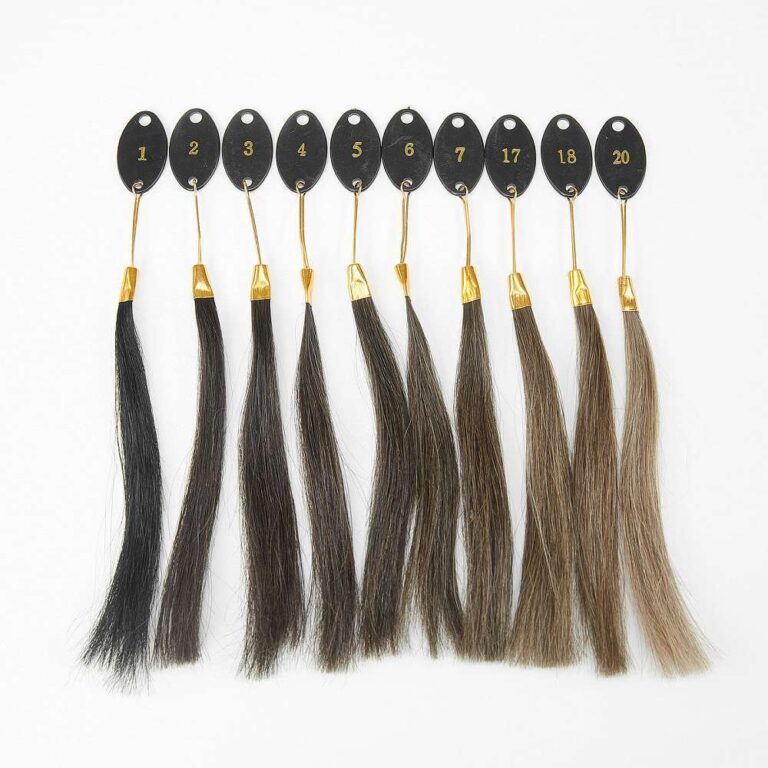
A cor do cabelo é mais fácil de avaliar a partir de várias mechas do que de uma única fotografia de ecrã. A luz interior, o processamento do telefone e as configurações do monitor podem alterar a aparência de um tom.
Compare o sistema com o cabelo das laterais ou de trás que permanecerá visível. Confirme o código de cor da base, qualquer percentagem de grisalho e se o grisalho está distribuído ou concentrado numa área específica. ReHair's Guia de Cores de Cabelo é uma referência útil, mas uma amostra física de cor ou fotos claras à luz natural podem ser mais seguras para uma correspondência exata.
5. Qual densidade, textura e comprimento irão se misturar?
A densidade descreve quanto cabelo está distribuído pela base. Mais densidade não é automaticamente mais natural. A quantidade certa deve relacionar-se com o cabelo existente do utilizador, o estilo preferido, a apresentação da idade e a construção da base.
Textura e ondulação também precisam corresponder ao estilo final desejado. Especificações de liso, ondulado, cacheado e crespo não devem ser tratadas apenas como rótulos visuais. O comprimento precisa deixar cabelo suficiente para o corte de integração, permanecendo adequado ao produto e estilo selecionados.
Estoque ou personalizado: qual deve escolher um comprador de primeira viagem?
Um sistema de estoque usa uma base predefinida, faixa de tamanho e especificações de cabelo disponíveis. Um sistema personalizado é construído em torno de medidas e detalhes selecionados. O melhor caminho depende de quão próximo uma opção de estoque está da especificação exigida e de quanta variação o usuário precisa.
Um sistema de estoque pode fazer sentido quando:
- a área de cobertura se encaixa em um tamanho de base padrão;
- uma cor, densidade e textura disponíveis estão próximas do resultado necessário;
- a base pode ser ajustada sem remover uma característica importante de construção;
- o usuário deseja começar a partir de uma configuração de produto estabelecida.
Um sistema personalizado pode fazer sentido quando:
- a base precisa de um formato não padrão ou contorno exato;
- cor, distribuição de grisalhos, ondulação, densidade ou direção do cabelo precisam de mais controle;
- uma unidade anterior está sendo usada como referência para medidas e construção;
- a combinação necessária não está disponível como produto de estoque.
Personalizado não significa que todo resultado possa ser reproduzido perfeitamente a partir de uma foto ou unidade antiga. Medidas, qualidade da referência, disponibilidade de material e especificações confirmadas ainda importam. Navegue pelos atuais próteses capilares personalizadas para entender o caminho disponível antes de enviar uma solicitação.
Fixação e corte de integração: o que acontece depois que o sistema chega?
A fixação mantém a base na posição pretendida. Um cut-in é o corte de cabelo e o trabalho de mistura realizado depois de o sistema ser colocado, para que o seu comprimento e forma façam a transição para o cabelo existente do utilizador e o estilo escolhido.
Fita e adesivos líquidos são comuns, mas o método adequado depende da base, da rotina de uso, da resposta da pele e das instruções do produto. Clipes ou outros métodos removíveis podem ser possíveis para construções selecionadas e cabelo existente suficiente. Não copie o esquema de adesivo de outro utilizador sem verificar o produto que está a usar.
Antes da primeira fixação:
- Leia as instruções para a base, adesivo e removedor específicos.
- Confirme onde a borda frontal deve ficar antes de expor a fita ou aplicar adesivo.
- Faça teste de contato com os produtos conforme orientado e pare se surgir irritação.
- Decida se o corte de integração será feito por um salão experiente ou em casa.
- Mantenha o removedor correto e os suprimentos de limpeza disponíveis antes da fixação.
Um sistema tecnicamente bom ainda pode parecer errado se for colocado muito baixo, cortado sem um plano ou combinado com uma densidade inadequada. Trate o ajuste como parte da decisão do produto, não como uma reflexão tardia.
Qual manutenção está realmente envolvida?
Uma prótese capilar é um produto vestível que precisa de limpeza, desembaraço, refixação e inspeção periódica. A programação não é universal. Ela muda com a base, adesivo, condição do couro cabeludo, clima, nível de atividade, produtos de modelagem e com que frequência a prótese é removida.
Uma rotina prática geralmente inclui:
- seguir as instruções de cuidado para o cabelo e a base;
- remover resíduos de adesivo sem esticar ou rasgar o material;
- apoiar o cabelo durante a lavagem e o desembaraço;
- limitar calor desnecessário, atrito e acúmulo de produtos agressivos;
- verificar a base e a borda frontal antes da refixação;
- substituir ou reparar o sistema quando sua condição não sustenta mais o resultado desejado.
Nadar, tomar banho, dormir e fazer exercícios podem ser possíveis com alguns sistemas e rotinas de fixação, mas também podem adicionar umidade, calor, atrito ou estresse ao adesivo. Siga as instruções para o sistema real e os produtos de fixação em vez de assumir que uma resposta se aplica a todos os usuários.
Checklist da primeira prótese capilar
Antes de encomendar, escreva as respostas que já sabe e assinale tudo o que ainda precisa de confirmação.
- Área a cobrir: topo, frontal, coroa, patch ou couro cabeludo completo
- Medidas da base e forma pretendida
- Rotina de colocação e remoção preferida
- Clima, exercício e nível de transpiração
- Prioridade da base: fluxo de ar, perfil baixo, limpeza ou durabilidade
- Código de cor do cabelo e percentagem de cabelo branco
- Densidade e textura
- Comprimento do cabelo e estilo final pretendido
- Método de fixação e produtos
- Plano de cut-in
- Via de stock ou personalizada
- Fotografias com luz natural ou referência de uma unidade antiga, se necessário
Se várias respostas ainda estiverem incertas, comece com o Seletor de Base em vez de adivinhar. Utilizadores experientes que já conhecem as suas especificações podem ir diretamente para as próteses capilares masculinas.
Perguntas frequentes
Preciso de rapar a cabeça para uma prótese capilar?
Depende da cobertura e do método de fixação. Os sistemas colados são habitualmente aplicados numa área preparada para que a base possa assentar plana e o adesivo possa contactar o couro cabeludo. Algumas opções removíveis ou com clipes podem usar o cabelo existente. Confirme o método de aplicação antes de cortar ou rapar qualquer coisa.
Uma prótese capilar pode parecer natural?
Pode produzir um resultado convincente quando a base, a linha do cabelo, a cor, o cabelo branco, a densidade, a textura, a colocação e o cut-in funcionam em conjunto. Nenhum guia responsável pode prometer que todos os sistemas serão invisíveis em qualquer luz ou a qualquer distância.
Quanto tempo dura uma prótese capilar?
Não existe uma duração universal fiável. A espessura e a construção da base são importantes, mas o manuseamento, a limpeza, a fixação, a frequência da remoção, o clima, a densidade do cabelo e o uso diário também afetam o estado. Utilize as orientações específicas do produto e inspecione a unidade em vez de planear com base num número fixo de meses.
Posso tomar duche, nadar ou fazer exercício com um sistema?
A resposta depende do sistema e dos produtos de fixação. Água, calor, suor e fricção afetam os materiais e as fixações de forma diferente. Verifique as instruções para a base, fita ou adesivo selecionados e peça orientação específica do produto se estas atividades fazem parte da sua rotina normal.
O que é um cut-in de uma prótese capilar?
Um cut-in é o corte de cabelo final e o processo de mistura depois de o sistema ser posicionado. O cabeleireiro molda o cabelo do sistema e liga-o visualmente ao cabelo existente do utilizador. É um dos principais fatores na aparência final.
Uma prótese capilar personalizada é sempre melhor do que uma de stock?
Não. Um sistema de stock pode ser a escolha mais simples quando o seu tamanho e especificações já se ajustam ao utilizador. O personalizado é útil quando a forma, as medidas, a cor, a densidade, o caracol ou a construção precisam de mais controlo. O objetivo é uma especificação precisa, não a palavra “personalizado” por si só.
Prótese capilar preço: quanto custa?
O custo depende do sistema, cabelo, base, comprimento, trabalho personalizado, serviços de acabamento, consumíveis de fixação e manutenção contínua. Verifique os preços atuais dos produtos e inclua os custos de aplicação e cuidado no orçamento. Um guia de custos ReHair separado abordará este cálculo em detalhe.
Um próximo passo sensato
A sua primeira decisão não é “De que fotografia de produto gosto?” É “O que precisa de ser coberto, e a que rotina deve o sistema adaptar-se?” Assim que essas respostas estiverem claras, a base, o tamanho, a cor e a densidade tornam-se muito mais fáceis de comparar.
Use os Seletor de Base de três perguntas para uma direção inicial. Se as suas medidas ou especificações de cabelo ficarem fora de uma opção de stock, compare a prótese capilar personalizada via antes de encomendar.

 English
  Français
  Deutsch
  Español
  Português
  Italiano
  Nederlands (Formeel)
  Suomi
Suomi  Svenska
  Čeština
  Dansk
Dansk  Ελληνικά
  Magyar
  Polski