
If you are comparing hair patches for bald spots, begin with the area you want to cover and the hair that will remain around it. A small temple gap and thinning that runs from the front to the crown are different fitting problems. They do not necessarily need the same size or shape of hairpiece.
A local hair patch is worth considering when the coverage need is confined to one area. A larger top hair system is worth assessing when several areas connect or when the surrounding hair cannot provide the blend you want. The choice should account for fit, attachment, styling, and upkeep—not only the product name or starting price.
First, clarify what each product covers
Sellers use “hair patch,” “hairpiece,” “toupee,” and “hair system” in different ways. Some use “hair patch” for a complete top unit. Always check the actual base dimensions and shape rather than assuming a patch must be small.
In this guide, a local patch means a piece intended for a specific temple, frontal, crown, side, or back area. A top hair system covers a larger section of the top of the head. A top system is not the same as a full-cap wig, which covers more of the head.
If you are new to the construction and terminology, begin with our first-time hair system guide. Here, the focus is deciding between localized and larger-area coverage.
When a local hair patch is worth considering
A patch may suit your plan when you like most of your existing hairstyle and want to supplement a clearly defined section. Assess the hair immediately around that section: its length, direction, color, texture, and fullness will determine how the piece blends.
Temple or frontal coverage
A temple piece targets the side of the front hairline; a frontal piece targets a different shape across the front. Compare those shapes before ordering. A piece that covers the measured width may still have the wrong contour or hair direction for your hairstyle.
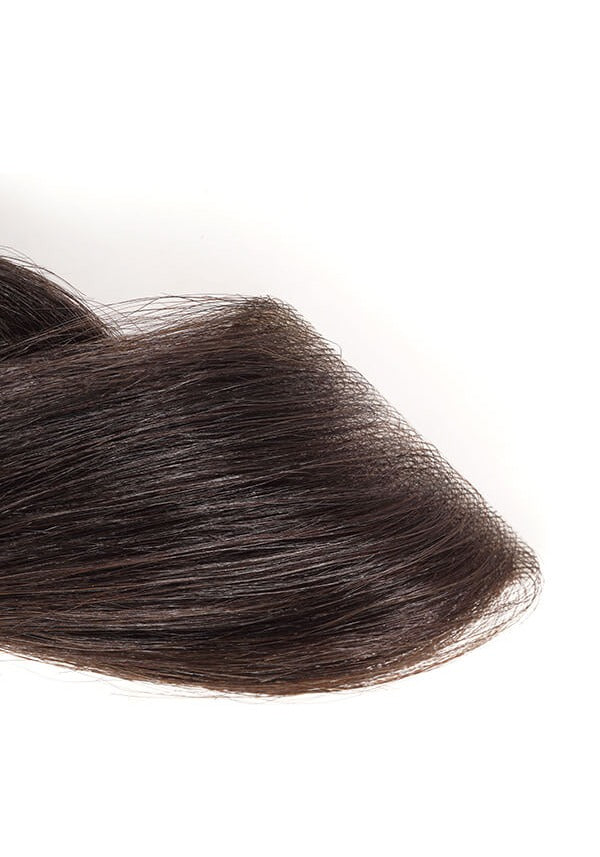
For example, ReHair’s opaska na włosy świątynna lists a 3 × 2.5-inch base and 6-inch hair length. Those describe two different things: the base covers an area, while the hair is styled into the surrounding hair. The listing also offers different piece quantities. Confirm whether the selected pack contains what you need for one side or both.
Crown coverage
A crown patch is an option to assess when the coverage need is concentrated around the crown. Ask your fitter to check how the added hair will follow the surrounding direction and how the area looks from the back, not just from the front in a mirror. ReHair’s crown patch page provides a starting product reference for that discussion.
Side or back coverage
Smaller side and back areas need their own shape and blending assessment. A top unit is not automatically a substitute. Show the location and your normal hair length when comparing the available hair patches.
When a larger top system deserves a closer look
Consider a top-system assessment when the areas you want to cover connect, or when separate patches would leave transitions you do not want. For example, a wearer considering both frontal and crown coverage may benefit from comparing the total fitting plan with one larger unit.
This does not mean a larger base is always better. It means the full layout needs to be considered. Ask where every edge would sit, what existing hair would remain visible, and what preparation the attachment method would require.
- One localized section: compare a purpose-shaped patch first, then check its blend and attachment plan.
- Several separate sections: ask a fitter to compare multiple patches with a larger unit, including the work involved in each option.
- A continuous area across the top: assess a top system against that complete area.
- Coverage needed beyond the top: ask whether a topper, partial unit, or full-cap option better matches the layout.
These are discussion starting points, not a diagnosis or an automatic recommendation from a photograph.
Compare the fitting plan, not just the size
Ask the same questions about both options. This makes a small patch and a larger unit easier to compare fairly.
Where will the base attach?
Confirm the intended attachment method and any preparation of existing hair with the fitter. Do not assume that every small patch can be placed over unprepared hair, or that every system uses the same adhesive, tape, or clips.
How will the edges blend?
Check the transition in the hairstyle you actually want to wear. A piece that looks concealed under a longer style may need a different fitting plan for a short cut or an exposed hairline. Color, curl, and density matter for patches as much as for top systems.
Who will maintain it?
Agree who will remove, clean, and refit the unit. Several small pieces create several placement decisions. One larger unit has a different coverage and handling requirement. Neither format guarantees a simpler routine for every wearer.
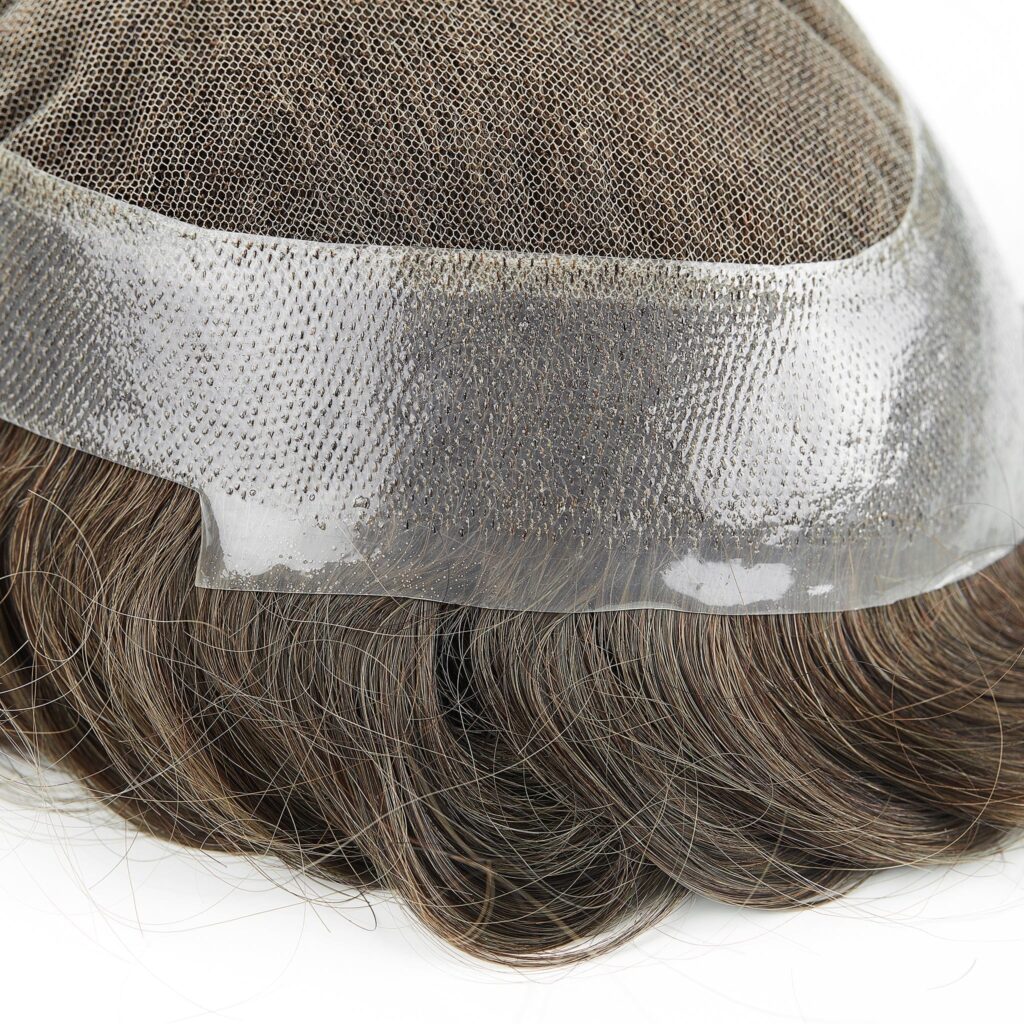
Base construction is another choice. The lace-and-polyurethane example above illustrates construction, not a recommended size for your head. Ask which construction and compatible supplies suit the proposed fitting plan before comparing wear routines.
Build a complete cost comparison
The price of the hairpiece is only one part of the decision. Compare the same items for each option:
- The correct unit or pack quantity, color, and specification.
- Any base cutting, hair cutting, or fitting service you need.
- Compatible attachment and removal supplies.
- Professional maintenance if you will not maintain it yourself.
- Shipping and the cost of replacing the unit when needed.
Ask for current terms before requesting alterations. Do not assume a customized or cut unit has the same return eligibility as an unused stock item. Likewise, keep the expected life of the hairpiece separate from the interval between removal and cleaning; they are different questions.
What to send before choosing
Provide front, top, side, and back photos, plus a close-up of the area you want to cover. Keep the surrounding hair visible. Include your preferred hairstyle and say whether you want to keep, grow, or shorten your current side and back hair.
Record the approximate coverage width and length with units. For two temples or other separate areas, identify each separately. These measurements start the conversation; a fitter may need a template or further checks before a final base shape is agreed.
Ask for a comparison: “Would a local patch or a larger top unit work better with my existing hair and this hairstyle? Please explain the proposed coverage, attachment preparation, cut-in, and maintenance for each.”
Przeglądaj ReHair hair patches if the need is localized. If the area or shape does not match a stock option, describe it in a custom hair system request. Choose after the coverage and fitting plan are clear—not simply because one product is called a patch.

 English
  Français
  Deutsch
  Español
  Português
  Italiano
  Nederlands (Formeel)
  Suomi
Suomi  Svenska
  Čeština
  Dansk
Dansk  Ελληνικά
  Magyar
  Polski