
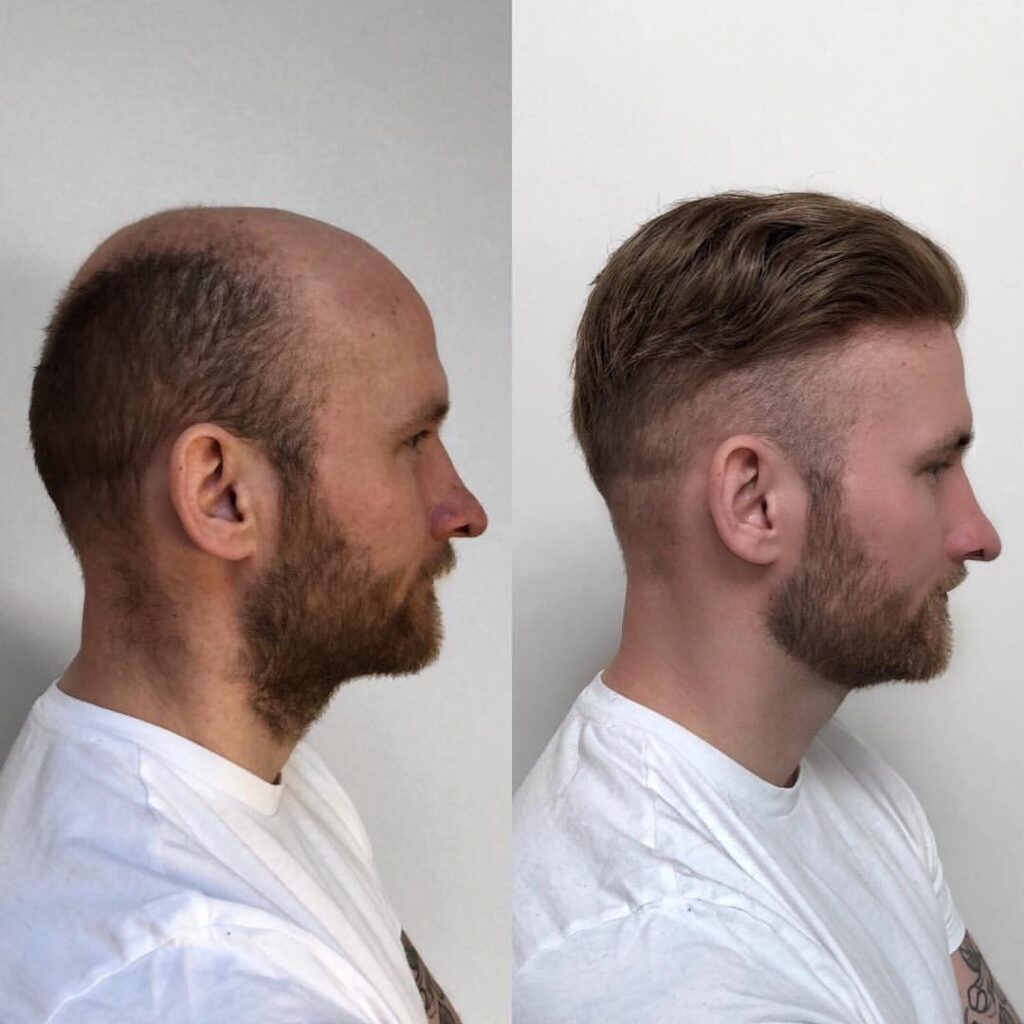
What is a hair system?
A hair system is a non-surgical hair replacement piece made from human or synthetic hair attached to a thin base. It is fitted over a specific area of hair loss and can be cut, colored and styled to blend with the wearer’s existing hair. You may also see it called a toupee, hairpiece, hair unit or hair replacement system.
That simple definition hides several choices. The base, coverage size, hair color, gray percentage, density, texture and attachment method all affect how a system looks and feels. There is no single “best” combination for everyone.
This guide explains those choices in plain language, so you can prepare for a first order and know which details still need confirming.
Quick answer: how does a hair system work?
The hair is ventilated (hand-tied), injected or looped into a base made from lace, polyurethane skin, monofilament or a combination of these. The base sits against the scalp and is held with tape, liquid adhesive, clips or a salon-fitted method, depending on the product and the wearer.
Once it is in place, the hair is cut and blended with the surrounding hair. The result depends on matching the system to the person, not only on choosing the thinnest base or the most expensive hair.
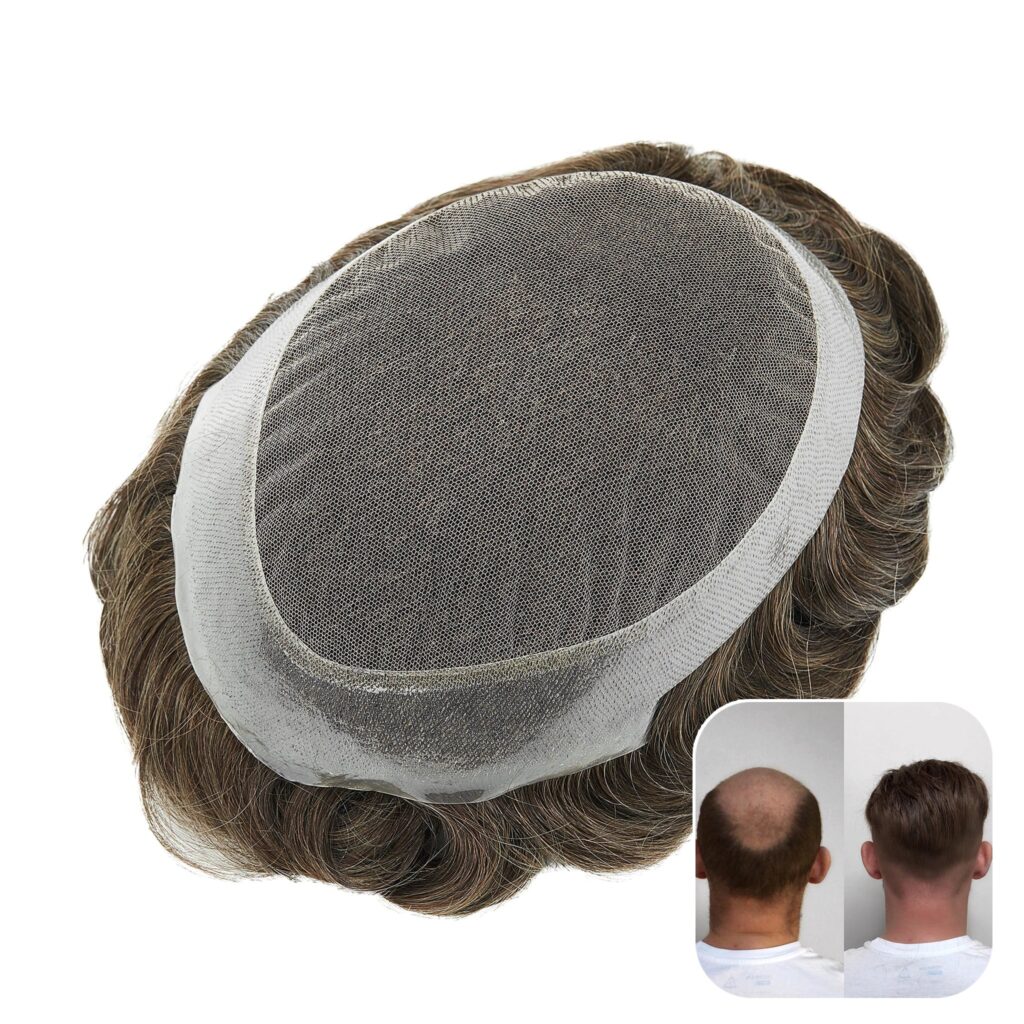
Hair system, toupee or wig: what is the difference?
These words are sometimes used interchangeably, but they do not always describe the same coverage or buying process.
| Term | Typical meaning | Common coverage | Main selection focus |
|---|---|---|---|
| Hair system | A fitted, non-surgical replacement designed for a defined area of hair loss | Partial or extensive | Base, size, hair specifications and attachment routine |
| Toupee | A traditional term often used for a men’s partial hairpiece | Usually top, crown or front | Blending with the wearer’s own hair |
| Wig | A piece that generally covers the whole scalp | Full head | Cap construction, fit, style and overall coverage |
In practice, a seller may call the same partial product a hair system, hair replacement system, hairpiece or toupee. Read the size and construction details instead of relying on the name alone.
For a deeper first-order overview, see ReHair’s Beginner’s Guide.
Who may consider a hair system?
A hair system may suit someone who wants a non-surgical way to cover thinning or hair loss and is comfortable with a fitting and maintenance routine. It can also suit experienced wearers who already know their base, size, color and density and want to reorder a familiar specification.
Common starting situations include:
- thinning across the top while usable hair remains at the sides and back;
- recession or loss concentrated around the front hairline;
- a thinning crown or another smaller area that does not need full coverage;
- a need for a particular curl, texture, density or custom base shape;
- a preference for a removable option instead of a surgical procedure.
A hair system does not diagnose or treat the cause of hair loss. Hair loss can have different causes, and the NHS advises seeking clinical help if you are worried about it. If the loss is sudden, patchy, painful, inflamed or otherwise unexplained, speak with a qualified healthcare professional before treating it as only a cosmetic concern.
Weighing it up? Our hair system pros and cons lists the trade-offs honestly.
The five decisions to make before your first order
You do not need to memorize every technical term. You do need enough information to avoid choosing by a model photo alone. Start with coverage, then work through the construction and hair specifications.
1. Which area needs coverage?
Coverage comes first because it determines the base size and product category. A standard top system, frontal piece, crown patch and full-cap solution are not interchangeable.
Measure the area you want to cover and compare it with the listed base dimensions. If a stock base is larger than you need, check whether that model can be cut down safely and how that affects its construction. Not every base can be trimmed the same way.
2. Which base fits your routine?
The base is the material that supports the hair and sits against the scalp. There is no universal best base: climate, attachment routine, removal frequency and priorities all matter.
| Base family | What it can offer | Trade-off to consider | A practical starting point |
|---|---|---|---|
| Lace | Airflow and a light feel | Adhesive cleanup through the mesh needs care | Hot climates, active routines or people who prioritize breathability |
| Thin skin | A low-profile surface and straightforward adhesive cleanup | Less airflow; very thin material needs gentle handling | Exposed hairlines or wearers who prioritize a scalp-like finish |
| Mono | More structure for repeat handling and fuller densities | Heavier and less sheer than fine lace or very thin skin | Durability-first routines or people who prefer a firmer base |
| Hybrid | Combines materials, such as lace with a polyurethane perimeter | Inherits some trade-offs from both materials | First-time wearers or mixed priorities such as airflow plus easier perimeter attachment |
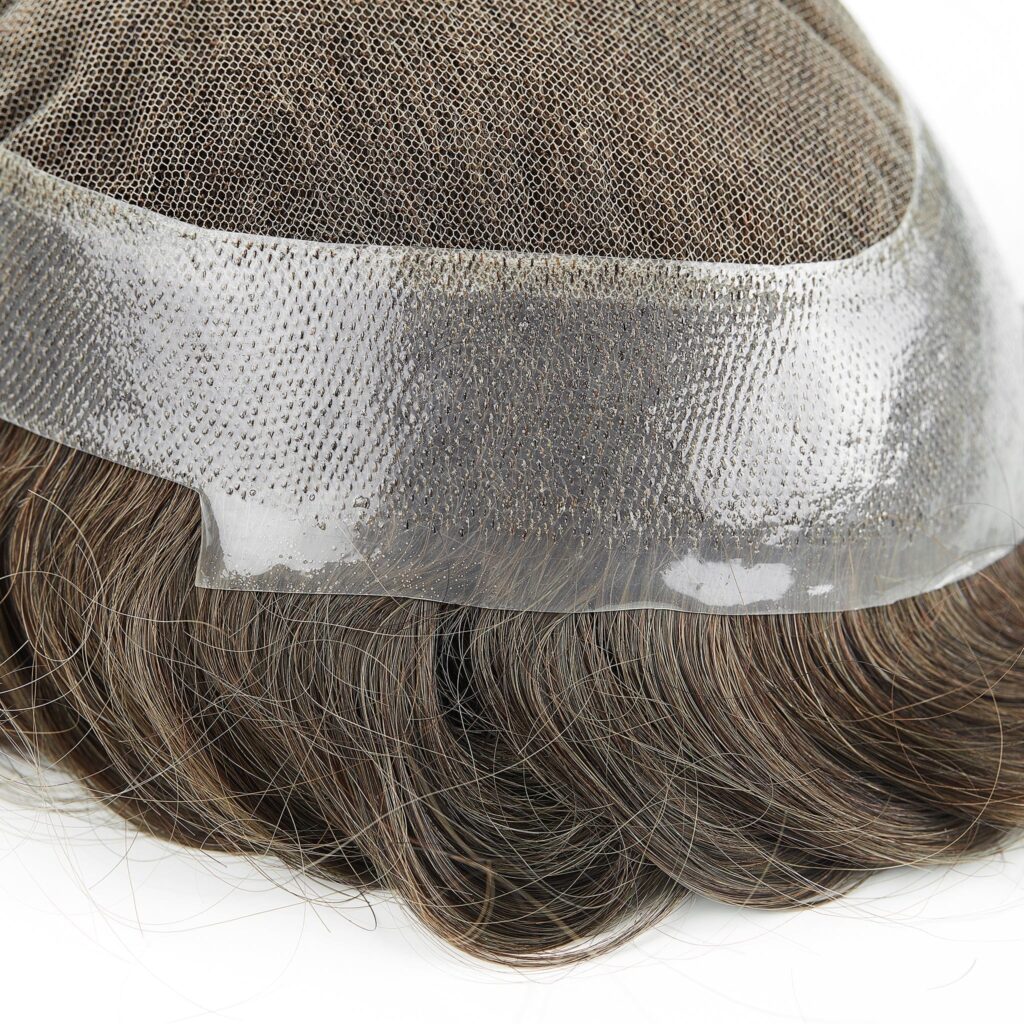
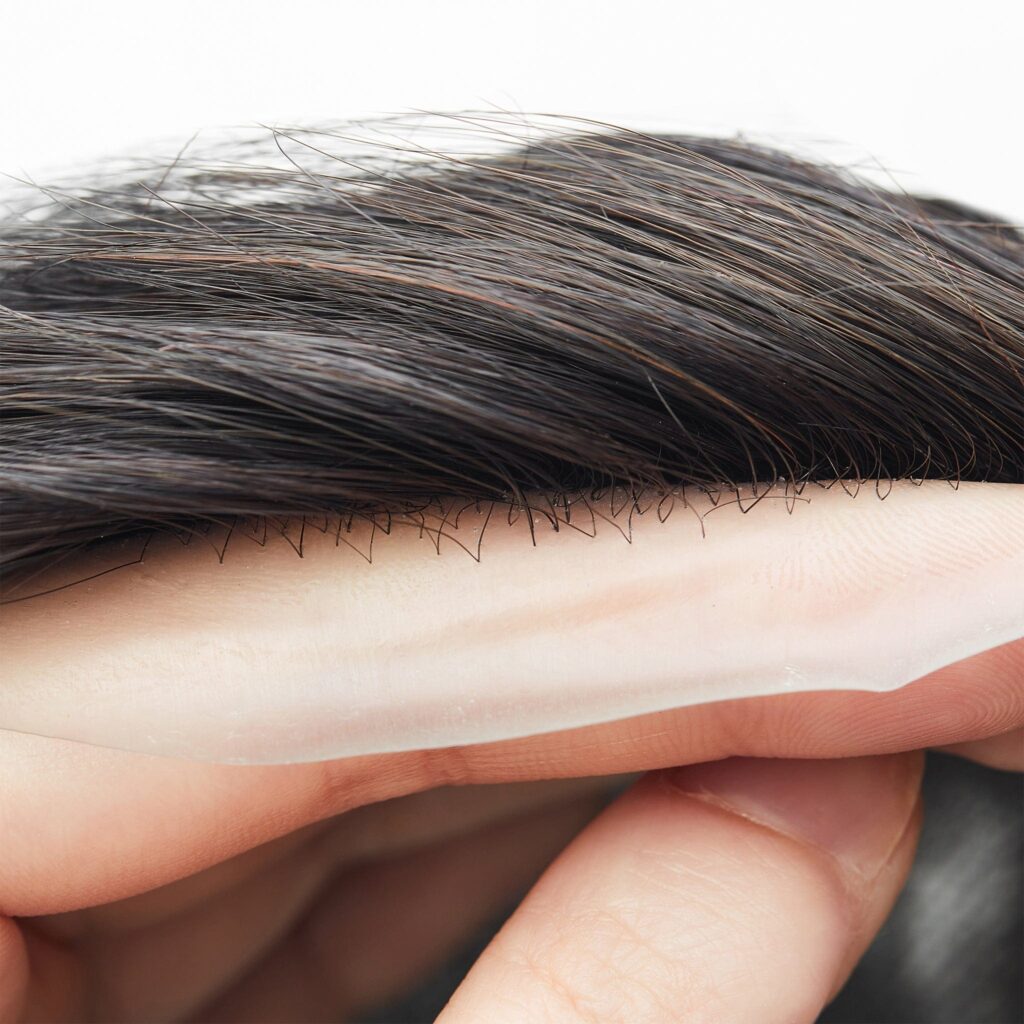
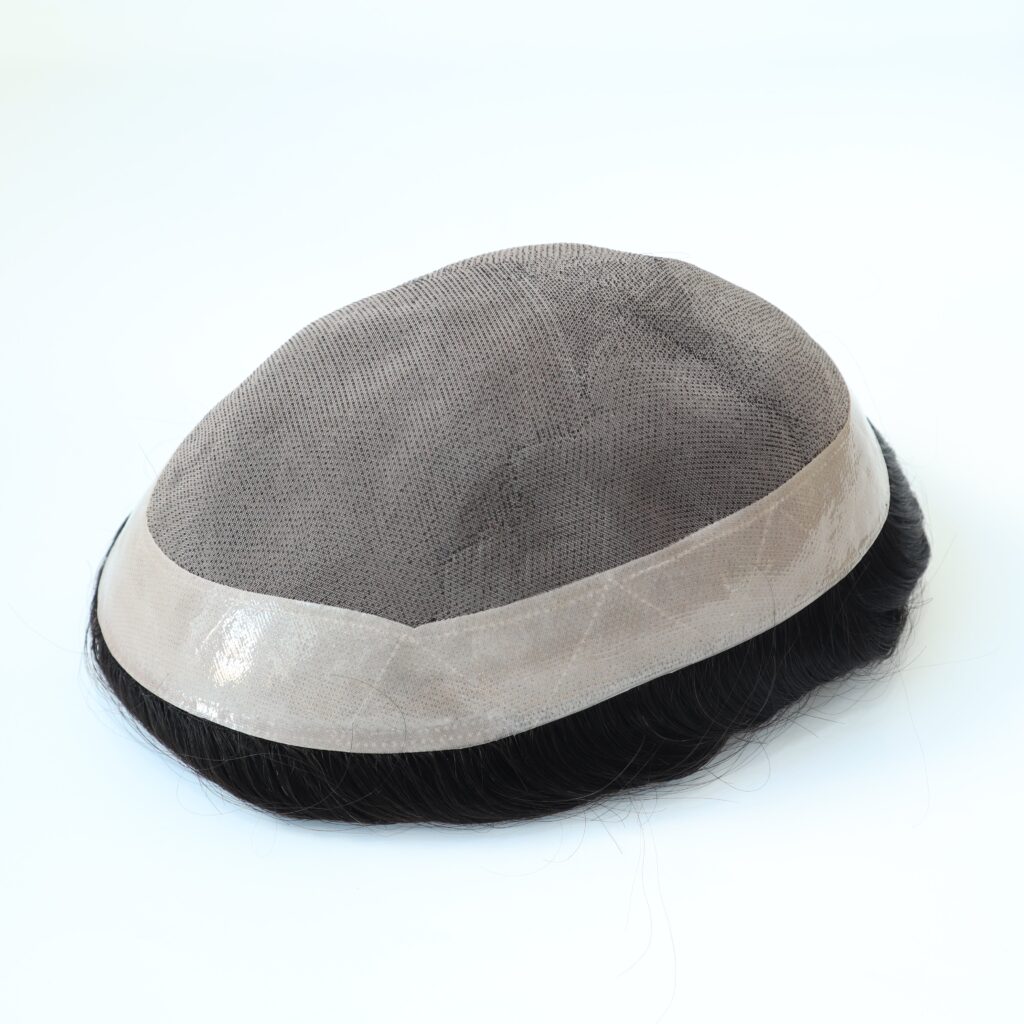
This is a decision framework, not a durability or appearance guarantee. Use the Hair System Base Selector for a routine-based recommendation, or compare the base types before choosing.
3. What size and shape do you need?
Base size should match the area being covered and leave enough surrounding hair for a clean blend. Too large covers healthy hair unnecessarily; too small leaves the edge of the loss area exposed.
Stock systems come in preset sizes. Some can be cut to a smaller shape, while others have features, such as a reinforced perimeter or a specific front construction, that limit where material can be removed. A custom system makes more sense when the shape, size or contour you need doesn’t match a stock option. Our guide to base size vs. hair length shows what to measure.
4. Which color and gray percentage match?
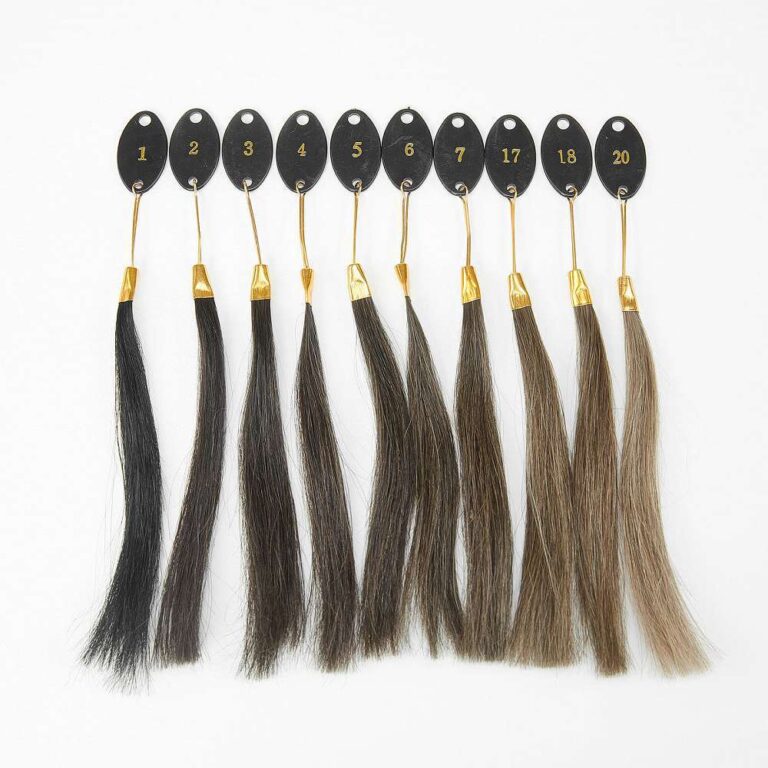
Hair color is easier to judge from several strands than from a single screen photo. Indoor light, phone processing and monitor settings all shift how a shade looks.
Compare the system with hair from the sides or back that will stay visible. Confirm the base color code, any gray percentage and whether the gray is spread evenly or concentrated in one area. ReHair’s Hair Color Guide is a useful reference, but a physical color sample or clear daylight photos are safer for a close match.
5. What density, texture and length will blend?
Density describes how much hair is on the base. More density is not automatically more natural. The right amount depends on your existing hair, preferred style, age and the base construction.
Texture and curl also need to match the finished style. Straight, wavy, curly and coily are specifications, not just visual labels. Length needs to leave enough hair for the cut-in while suiting the product and the style you want; see our toupee hairstyles for ideas.
Stock or custom: which should a first-time buyer choose?
A stock system has a preset base, size range and hair options, and ships ready-made. A custom system is built around your measurements and details, so it is made to order and takes longer: our rush service guarantees production in 30–40 days, and standard production takes longer than that.
A stock system may make sense when:
- the coverage area fits a standard base size;
- an available color, density and texture are close to what you need;
- the base can be adjusted without removing an important construction feature;
- you want to start from an established product and get it sooner.
A custom system may make sense when:
- the base needs a non-standard shape or exact contour;
- color, gray distribution, curl, density or hair direction needs more control;
- you are using a previous unit as a reference for measurements and construction;
- the combination you need is not available as a stock product.
Custom does not mean every result can be reproduced perfectly from a photo or old unit. Measurements, reference quality, material availability and confirmed specifications still matter. Browse current custom hair systems to see how the process works before sending a request.
Attachment and the cut-in: what happens after the system arrives?
Attachment holds the base in position. The cut-in is the haircut and blending done after the system is placed, so its length and shape transition into your existing hair and chosen style.
Tape and liquid adhesive are the most common methods, but the right one depends on the base, your routine, your skin and the product instructions. Clips or other removable methods can work on some constructions if you have enough of your own hair. Don’t copy another wearer’s adhesive schedule without checking the product you are using. Our hair system glue guide covers choosing, applying and removing adhesive.
Before a first attachment:
- Read the instructions for the specific base, adhesive and remover.
- Confirm where the front edge should sit before exposing tape or applying adhesive.
- Patch-test products as directed and stop if irritation develops.
- Decide whether the cut-in will be done by an experienced salon or at home.
- Have the correct remover and cleaning supplies ready before you attach it.
A well-made system can still look wrong if it is placed too low, cut without a plan or paired with an unsuitable density. Treat fitting as part of the product decision, not an afterthought.
What maintenance is actually involved?
A hair system needs cleaning, detangling, reattachment and regular inspection. The schedule changes with the base, adhesive, scalp, climate, activity level, styling products and how often you remove it.
A practical routine usually includes:
- following the care instructions for the hair and base;
- removing adhesive residue without stretching or tearing the material;
- supporting the hair while washing and detangling;
- limiting unnecessary heat, friction and product buildup;
- checking the base and front edge before reattachment;
- repairing or replacing the system when its condition no longer gives the result you want.
Swimming, showering, sleeping and exercise are possible with many systems and attachment methods, but they add moisture, heat, friction or stress on the bond. Follow the instructions for your system and attachment products rather than assuming one answer fits every wearer.
First hair system checklist
Before ordering, write down the answers you know and mark anything that still needs confirming.
- Area to cover: top, front, crown, patch or full scalp
- Base measurements and intended shape
- Preferred wear and removal routine
- Climate, exercise and sweat level
- Base priority: airflow, low profile, cleanup or durability
- Hair color code and gray percentage
- Density and texture
- Hair length and intended finished style
- Attachment method and products
- Cut-in plan
- Stock or custom route
- Daylight photos or an old-unit reference, if needed
If several answers are still uncertain, start with the Base Selector rather than guessing. Experienced wearers who already know their specifications can go straight to our men’s hair systems.
Frequently asked questions
Do I need to shave my head for a hair system?
It depends on the coverage and attachment method. Bonded systems are usually fitted to a shaved or closely trimmed area so the base sits flat and the adhesive can grip the scalp. Some clip-on options use your existing hair instead. Confirm the fitting method before cutting or shaving anything.
Can a hair system look natural?
Yes, when the base, hairline, color, gray, density, texture, placement and cut-in work together. No honest guide can promise that every system will be undetectable in every light and at every distance.
How long does a hair system last?
It depends mostly on the base. On our stock systems, the listed wear period is about one month for ultra-thin skin, 3–4 months for lace and thin skin designs, and 4–6 months for fine mono. Handling, cleaning and removal habits can shorten or stretch that. See how long a toupee lasts for the full breakdown.
Can I shower, swim or exercise while wearing one?
Usually yes, once the attachment has fully set. Water, heat, sweat and friction affect materials and bonds differently, so check the instructions for your base, tape or adhesive.
What is a hair system cut-in?
The final haircut and blending after the system is in place. The stylist shapes the system hair and connects it with your own hair. It is one of the biggest factors in how natural the result looks.
Is a custom hair system always better than a stock one?
No. A stock system is simpler and faster when its size and specifications already fit you. Custom is useful when shape, measurements, color, density, curl or construction need more control.
How much does a hair system cost?
As two examples from our store at the time of writing, the ReHair Ceres fine mono system starts at $145 and the ReHair Leo ultra-thin skin system starts at $169. On top of the unit, budget for tape or glue, remover, the cut-in and replacements. Our hair system cost guide walks through the full calculation.
A sensible next step
Your first decision is not “Which product photo do I like?” It is “What needs to be covered, and what routine must the system fit?” Once those answers are clear, base, size, color and density become much easier to compare.
Use ReHair’s three-question Base Selector for a starting direction. If your measurements or hair specifications fall outside a stock option, compare the custom hair system route before ordering.





 English
 Français
 Deutsch
 Español
 Português
 Italiano
 Nederlands (Formeel)
 Suomi
 Svenska
 Čeština
 Dansk
 Ελληνικά
 Magyar
 Polski